


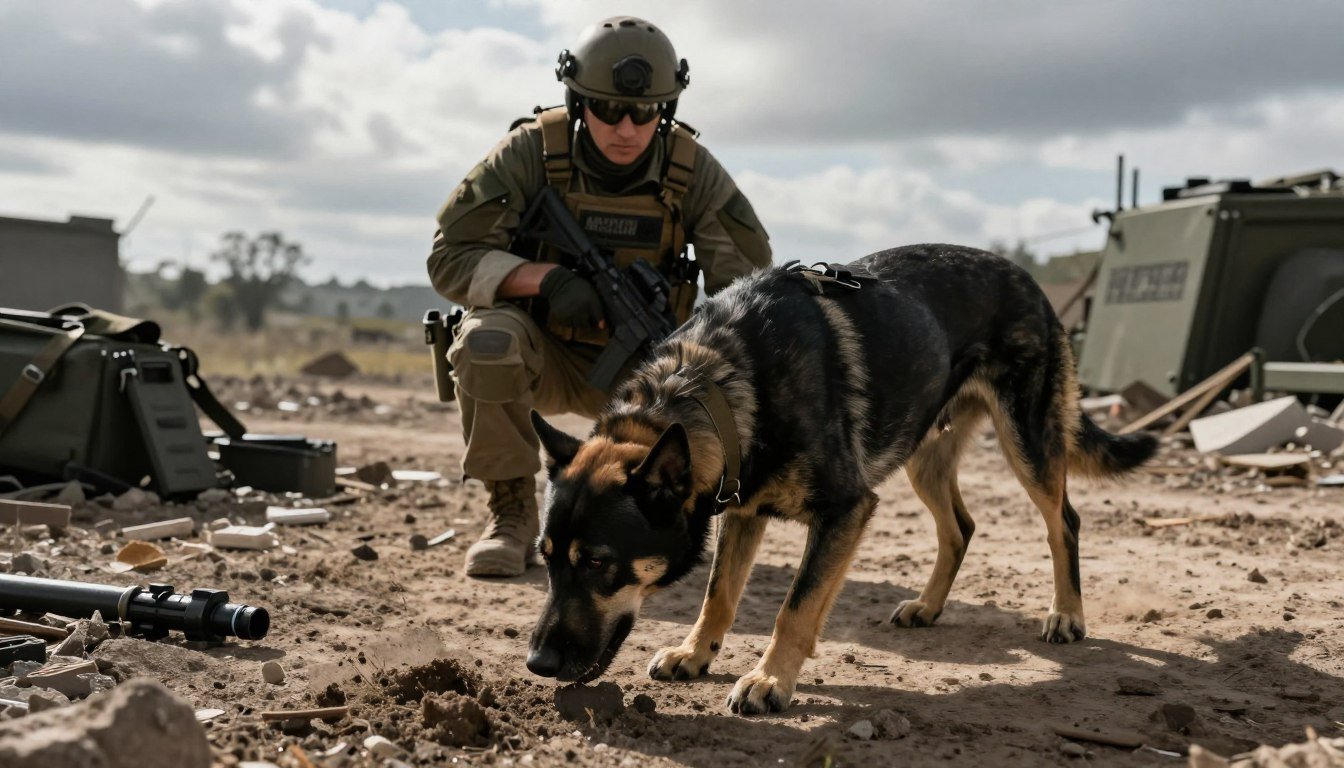
Have you ever wondered how some four-legged heroes can achieve an astonishing 98% accuracy in detecting explosives? These remarkable canines play a crucial role in keeping soldiers safe on the battlefield. With their keen sense of smell, they can identify dangerous substances that technology often struggles to detect.
- The Evolution and History of Military IED Detection Dogs
- Understanding How IED Detection Dogs Work
- The Power of a Canine’s Sense of Smell
- Types of Odors and Explosives Detected
- Detection Techniques and Indication Methods
- Training and Selection of Military IED Detection Dogs
- Operational Roles and Deployment of Military IED Detection Dogs
- Applications in Combat Zones and Patrols
- Use in Vehicle, Building, and Route Searches
- Impact on Mission Success and Soldier Safety
- The Best Breeds and Physical Characteristics for Detection Dogs
- The Critical Relationship Between Canine and Handler
- Comparing Canine Detection to Technology in Explosive Detection
- Saving Lives: The Impact of Military IED Detection Dogs in Combat
- Statistics on Accuracy and False Positives
- Morale and Psychological Benefits for Troops
- Honoring Fallen Canine Heroes
- Conclusion
- FAQ
- How are detection canines selected for their roles?
- What types of training do these canines undergo?
- How do handlers and canines work together?
- What breeds are most commonly used for detection?
- What advantages do canines have over technology in detection?
- How do detection canines impact soldier safety?
- What is the importance of the bond between a handler and their canine?
- How do these canines contribute to morale among troops?
- Are there any statistics on the accuracy of detection canines?
- How are fallen detection canines honored?
- References
Specialized search dogs, known for their incredible abilities, operate off-leash and can detect odors from up to 656 feet away. Their sensitivity is so high that they can sense explosive particles at levels approaching just one molecule per sniff, according to research from Sandia National Laboratory.
These dogs are not just tools of war; they are playful companions who save lives every day. Throughout this article, we will explore their training, the bonds they form with their handlers, and the real-world impact they have on soldiers’ lives. Join us on this journey to understand why these detection dogs are truly irreplaceable partners in modern warfare.
Key Takeaways
- Specialized search dogs achieve a 98% accuracy rate in detecting explosives.
- They can operate off-leash and detect odors from significant distances.
- Their sensitivity to explosives surpasses that of modern technology.
- These dogs form strong bonds with their handlers, enhancing their effectiveness.
- They are vital companions that contribute to soldier safety in combat zones.
The Evolution and History of Military IED Detection Dogs
The role of military working dogs has evolved significantly from the trenches of World War I to modern-day combat zones. Their journey began in 1918 when working dogs first joined the Royal Australian Engineers as messengers. This early use laid the foundation for the specialized roles that canines would take on in the years to come.
In 1944, the 1st Australian Dog Platoon recognized the potential of search dogs. They began training canines for specific military tasks, marking a pivotal moment in canine history. However, during World War II, the US Army acquired over 19,000 dogs, only to find that approximately 45 percent were unsuitable for training. This highlighted the challenges faced in selecting the right canines for these critical roles.
Despite their potential, mine detection dogs during WWII often proved unreliable. Analysis later revealed that the issue stemmed from faulty training methods rather than any limitations of the dogs themselves. This was a significant learning moment for military trainers.
As we transitioned to the Vietnam War, the use of canines expanded dramatically. More than 9,000 dog handlers served, conducting around 84,000 missions with scout, tracker, and mine/tunnel dog teams. These dogs worked off-leash, often up to 120 feet from their handlers, searching for mines, booby traps, and trip wires along roads and railroad tracks.
The British Jungle Warfare School in Malaysia played a crucial role in establishing the US Army’s first tracker dog program. They introduced Labrador retrievers for tracking functions, further enhancing the effectiveness of canine teams in combat.
The lessons learned from these historical events shaped the rigorous training programs we see today for explosive detection dogs. Each success and failure contributed to a better understanding of how to train and utilize these canines effectively.
The evolution from messenger dogs to specialized detection canines is a story of continuous learning and partnership. It highlights the deep respect for the incredible sense of smell that these dogs possess and the bravery of the handlers who trust them in high-stakes situations.
Understanding How IED Detection Dogs Work
The incredible abilities of canines in explosive detection stem from their remarkable sense of smell. These dogs are not just pets; they are highly trained partners that help ensure safety in dangerous situations. Their noses are extraordinary tools, capable of detecting odors at levels approaching one molecule per sniff, as reported by Sandia National Laboratory.
Dogs possess hundreds of millions of scent receptors, and a significant portion of their brain is dedicated to processing smells. This makes them natural-born detection machines. They can identify various odors, including those associated with explosives.
The Power of a Canine’s Sense of Smell
Explosive detection dogs are trained on 12 basic odors. This specialized training enables them to recognize different types and compositions of explosives. Their training allows them to identify explosives used in roadside bombs, vehicle-borne devices, and hidden caches. Additionally, these canines can detect the scent of firearms, further enhancing their utility in the field.
Types of Odors and Explosives Detected
Here are some common types of explosives that detection dogs can identify:
| Type of Explosive | Common Uses |
|---|---|
| ANFO (Ammonium Nitrate Fuel Oil) | Used in mining and construction |
| TNT (Trinitrotoluene) | Used in military applications |
| RDX (Research Department Explosive) | Used in military and commercial explosives |
| HMX (High Melting Explosive) | Used in military applications |
| Plastic Explosives | Used in various illegal activities |
Detection Techniques and Indication Methods
Detection techniques in the field include off-leash searches, where dogs can work up to 656 feet away from their handlers. This distance allows them to cover large areas quickly. When a dog encounters an explosive odor, it signals the presence of a threat through a passive response, such as sitting, lying down, or staring at the source. This method is crucial for safety, as it keeps the dog calm and still near the explosive, avoiding unnecessary risks.
Incredibly, a specialized search dog can thoroughly search a house or courtyard in as little as two minutes. This efficiency dramatically reduces the time troops spend in danger zones. The teamwork between the dog’s nose and the handler’s interpretation of signals is vital for mission success.
Understanding how these dogs work is essential to appreciating their remarkable accuracy in combat situations. Their unique abilities and specialized training make them invaluable assets in ensuring safety.
Training and Selection of Military IED Detection Dogs
The journey to becoming a skilled explosive detection canine is both rigorous and rewarding. Not every dog can take on this vital role. Candidates must show a keen instinct to hunt, play, and retrieve. These traits make training enjoyable and effective.
Interestingly, many explosive detection dogs come from shelters. This heartwarming fact means that these heroes might have once been beloved pets. Recruiters specifically look for extroverted and confident canines. They seek dogs that remain calm and focused, even when the world around them becomes chaotic.
One prominent training program is the Specialized Search Dog (SSD) course at Lackland Air Force Base. Here, green handlers and dogs are paired for an initial 79-day block of instruction. After completing this basic course, teams spend an additional 14 days at Yuma Proving Ground in Arizona. This full dress rehearsal includes helicopter rides, gunfire, ladders, and mock Iraqi villages.
Orlando Nunez leads a talented team of 28 instructors, which includes four British Army retirees, two US Marines, and 22 US Army instructors. Together, they train about 100 SSD teams each year. The British Army is widely regarded as the world leader in training explosive detection canines. Veterans like Paul C. Bunker bring that expertise directly to American handlers.
Building an effective handler-dog team is crucial. Handlers learn to read subtle canine signals, while dogs develop trust in their handlers’ directions. This bond is vital for success in the field.
Training is continuous and perishable. Skills must be maintained through regular practice. With each session, the bond between handler and dog grows stronger. This rigorous selection and training process is precisely why these detection canines achieve such impressive accuracy and reliability in the field.
Operational Roles and Deployment of Military IED Detection Dogs
In the heart of combat zones, specialized search dogs play a pivotal role in safeguarding troops. These remarkable canines are often deployed ahead of infantry and vehicle patrols. Their mission is to locate threats before soldiers get close to danger. This proactive approach saves lives and enhances mission success.
Operating off-leash, these dogs can cover distances of up to 656 feet. This distance creates a safe buffer zone for handlers and troops while the dog sweeps the terrain ahead. The efficiency of these canines is astounding. They can search 10 times faster and cover 10 times more area than a human, with a much greater degree of thoroughness.
Applications in Combat Zones and Patrols
Specialized search dogs have three main applications: clearing vehicles, buildings, and routes. An SSD team can clear a three-story building in as little as four minutes. This rapid response is crucial in high-stakes environments where every second counts.
Use in Vehicle, Building, and Route Searches
In 2003, it was reported that up to 60 percent of all insurgent attacks began with an IED detonation. To combat this, explosive detection dogs (EDDs) were used to search compounds for contraband, such as drugs and weapons caches. This disrupts insurgent supply chains and significantly reduces the number of explosives on the street.
Impact on Mission Success and Soldier Safety
Col. Randal G. Martin noted that after successful cordon and search operations, there would follow a period with fewer and lower-quality IEDs. Every minute a dog spends searching is a minute troops are not exposed to hidden explosives. This time savings translates directly into saved lives.
Imagine a typical mission: the helicopter arrives, and the dog team disembarks. With confidence, troops advance after a clean sweep, knowing they are protected. The speed and accuracy of these canines allow units to complete searches quickly, moving through neighborhoods without lingering in vulnerable positions.
Operational deployment is where all the training pays off. The bond between dog and handler becomes a matter of life and death, highlighting the critical role these canines play in ensuring safety in combat zones.
| Search Application | Time to Clear | Area Covered |
|---|---|---|
| Vehicle Searches | 1-2 minutes | Up to 656 feet |
| Building Searches | 4 minutes | Three-story buildings |
| Route Searches | Varies | Extensive terrain |
The Best Breeds and Physical Characteristics for Detection Dogs
When it comes to finding explosives, not all breeds are created equal. Certain canines excel in explosive detection due to their unique traits. Understanding these breeds can help enhance safety and efficiency in high-stakes environments.
The most common breeds used for explosive detection include:
- Belgian Malinois
- German Shepherd
- Dutch Shepherd
- Labrador Retriever
- German Pointer
- Beagle
- Springer Spaniel
Each breed brings unique strengths to the job. For instance, Malinois and German Shepherds are known for their drive and focus. Meanwhile, Labradors and Springers are friendly and approachable, which boosts troop morale.
One remarkable example is Grek, a yellow Labrador retriever. He became a star specialized search dog in Iraq, known for his speed and thoroughness. Grek can search open areas, vehicles, buildings, and routes efficiently.
Interestingly, physical size and intimidating presence are not the main selection criteria. What matters most is a dog’s obsessive love of balls and a natural instinct to keep its nose to the ground. This passion drives them to perform well in explosive detection tasks.
Breed traits play a crucial role in detection performance. High-energy breeds excel at long searches, while smaller breeds like Beagles can access tight spaces that larger dogs cannot. The British Army’s historical use of Labrador retrievers for tracking demonstrates how breed selection has been refined over decades of operational experience.
Law enforcement and military agencies often prefer breeds with strong play drives. The reward of a ball or toy keeps the dog motivated during long, demanding searches. The best detection dog is not necessarily the biggest or strongest, but the one with the right combination of drive, focus, and temperament.
It’s worth noting that many successful explosive detection dogs come from shelters. This shows that breed is less important than individual character and willingness to work. The variety of breeds used reflects the versatility of canine detection and the careful matching of dogs to specific mission requirements.
| Breed | Strengths |
|---|---|
| Belgian Malinois | High drive and focus |
| German Shepherd | Strong work ethic and loyalty |
| Labrador Retriever | Friendly demeanor and high play drive |
| Beagle | Ability to access tight spaces |
| Springer Spaniel | Energetic and enthusiastic |
The Critical Relationship Between Canine and Handler
The bond between a handler and their canine partner is the foundation of effective explosive detection. This relationship is vital for ensuring that both the dog and handler can perform at their best in high-pressure situations. Without trust and communication, even the most skilled dog may not achieve peak performance.
Handlers undergo extensive training to understand canine signals. They learn to recognize subtle changes in body language, ear position, tail movement, and breathing patterns. These indicators often reveal when a dog has caught a scent. A dog’s alert may not always be a perfect sit; handlers must interpret fuzzy or partial alerts and decide whether to trust the dog’s instincts.
Training Handlers to Understand Canine Signals
Effective training focuses on developing the handler’s ability to read their dog’s behavior accurately. This skill is essential in high-stakes situations where quick decisions can save lives. Handlers spend countless hours with their dogs, learning to interpret every nuance of their canine partner’s actions.
Emotional Bonds and Their Role in Team Success
Strong emotional bonds develop between explosive detection dog (EDD) handlers and their dogs. This connection translates into better teamwork and more reliable detection in the field. Handlers and dogs live, train, and deploy together, fostering a level of mutual understanding that technology cannot replicate.
Every handler interviewed emphasized how often soldiers expressed gratitude for their presence with the dog. These teams not only save lives but also provide a comforting canine companion in challenging environments. The emotional bond helps handlers cope with the stress of combat, offering a sense of normalcy amidst chaos.
Daily routines of feeding, grooming, playing, and training strengthen the foundation of trust between handler and dog. The handler’s role extends beyond commands; they advocate for their dog’s well-being, ensuring the canine is healthy, rested, and mentally sharp for every mission.
Ultimately, the handler-dog relationship is a true partnership of equals. Both depend on each other for safety, success, and emotional support. This unique bond enhances the effectiveness of explosive detection efforts, showcasing the incredible synergy between humans and canines.
| Aspect | Description |
|---|---|
| Trust | Essential for optimal performance in the field. |
| Communication | Handlers learn to interpret canine signals accurately. |
| Emotional Support | Canines provide comfort in stressful environments. |
| Daily Routines | Feeding, grooming, and training build trust. |
| Partnership | A true collaboration for safety and success. |
Comparing Canine Detection to Technology in Explosive Detection
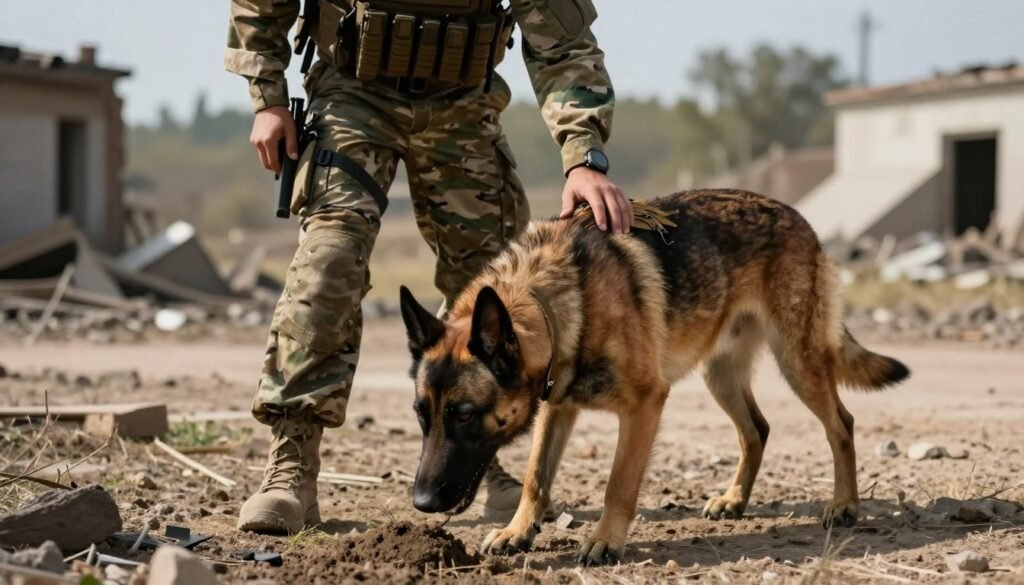
In today’s world, technology has made great strides, yet nothing consistently matches the capabilities of a trained canine in explosive detection. American forces have discovered that, especially in dirty and chaotic environments, a military working dog’s detection abilities are unparalleled.
The core advantage lies in a dog’s vapor sensing capability, which far surpasses modern measurement techniques. According to research from Sandia National Laboratory, dogs can detect odors with sensitivity approaching one molecule per sniff. This incredible ability gives them a significant edge over electronic devices.
Moreover, dogs can search 10 times faster and cover 10 times more area than a human. This efficiency makes them far more effective than manual screening methods. While bomb-makers may change triggers from radio-frequency to pressure switches, they cannot alter or hide the odor of the explosives themselves.
In addition to explosives, these canines can also detect firearm odors, providing a broader detection profile than many electronic devices that focus on specific chemical signatures. This versatility makes them invaluable in various scenarios.
However, it is important to acknowledge the limitations of using dogs. They require rest and can become fatigued, which may affect their performance. Extreme weather, health issues, or distractions in the environment can also play a role in their effectiveness.
Technology serves as a complementary tool in explosive detection. Electronic sensors, X-ray machines, and drones can cover areas where dogs cannot go or provide backup confirmation of a dog’s alert. Law enforcement and military agencies increasingly use a layered approach, combining canine teams with technology to maximize detection coverage and minimize false negatives.
In conclusion, while technology has advanced significantly, the goal is not to replace dogs with these devices. Instead, the focus should be on using both together, with the dog’s nose remaining the gold standard for explosive detection in the field.
| Advantage | Dogs | Technology |
|---|---|---|
| Sensitivity | One molecule per sniff | Varies by device |
| Speed | 10 times faster | Slower than dogs |
| Area Coverage | 10 times more area | Limited by device range |
| Adaptability | Can detect various odors | Tuned to specific signatures |
| Limitations | Requires rest, can be affected by environment | May miss odors or require maintenance |
Saving Lives: The Impact of Military IED Detection Dogs in Combat
The impact of specialized search canines in combat is profound, as they save countless lives every day. Their remarkable accuracy and the emotional support they provide are invaluable to troops in high-stress environments.
Statistics on Accuracy and False Positives
Col. Randal G. Martin commanded five SSD teams in Iraq that executed numerous finds while encountering very few false positives. This impressive statistic highlights the effectiveness of these canines in real combat conditions. The 98% accuracy figure is not merely a training metric; it is validated by field reports from commanders who relied on these dogs to clear routes, buildings, and vehicles under fire.
Morale and Psychological Benefits for Troops
The presence of these canines also boosts morale among soldiers. Every handler interviewed mentioned how often soldiers thanked them for being there with the dog. The teams not only save lives but also provide a comforting canine companion in a stressful environment. A friendly Labrador retriever walking through camp can lift spirits, reduce stress, and remind troops of home, making the dogs valuable beyond their detection capabilities.
Honoring Fallen Canine Heroes
We must also honor the sacrifices of fallen canine heroes. The Australian Army Honour Roll includes names like Merlin, Razz, Andy, Nova, Herbie, Lucky, Quake, Devil, and Fax. These dogs were killed in vehicle incidents, IED blasts, and small-arms contacts while serving alongside their handlers in Afghanistan. Their sacrifices are remembered with deep respect.
Lucky was declared Missing in Action during a large contact on 4 July 2011, a reminder of the dangers these dogs face every time they deploy. These canines gave their lives to protect soldiers, and their names are honored alongside their human comrades.
The bond between handler and dog makes the loss of a canine hero especially painful. The military community mourns them as true members of the team. Ultimately, the measure of these dogs’ impact is reflected in the number of soldiers who came home alive because a dog found the bomb first.
| Name | Date of Incident | Details |
|---|---|---|
| Merlin | 31 August 2007 | Killed in action |
| Razz | 20 September 2007 | Killed in action |
| Andy | 22 November 2007 | Killed in action |
| Nova | 23 October 2009 | Killed in action |
| Herbie | 7 June 2010 | Killed in action |
| Lucky | 4 July 2011 | Missing in action |
| Quake | 25 June 2012 | Killed in action |
| Devil | 2 July 2012 | Killed in action |
| Fax | 6 January 2013 | Killed in action |
Conclusion
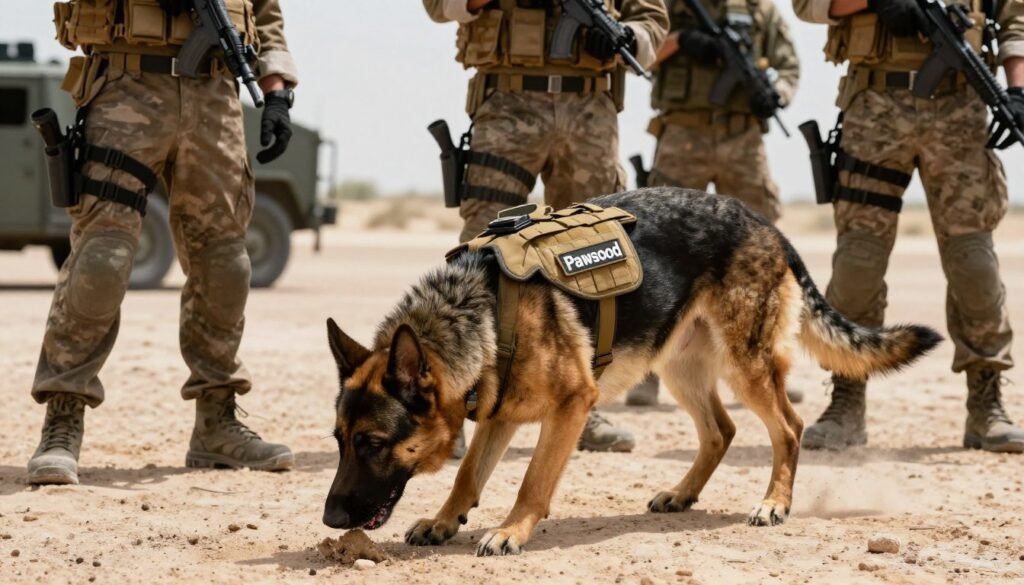
As we reflect on the vital role of specialized search canines, their impact on safety cannot be overstated. These remarkable animals serve as one of the best tools against improvised explosive devices, with a detection ability that technology still cannot match.
These dogs achieve remarkable accuracy through a combination of extraordinary noses, rigorous training, careful breed selection, and deep bonds with their handlers. Every successful detection means soldiers get to return home to their families, and every false positive avoided allows troops to move with confidence.
We must also acknowledge the sacrifices of canine heroes who have been killed in action. Their bravery, alongside the dedication of their handlers, deserves our utmost respect. These canines are not just tools of war; they are loyal companions who bring comfort and hope to troops in the hardest circumstances.
The demand for explosive detection dogs continues to grow as threats evolve. The partnership between humans and canines will remain essential for the foreseeable future. In closing, military IED detection dogs do not just detect explosives — they save lives, one sniff at a time.
FAQ
How are detection canines selected for their roles?
Selection focuses on key traits such as drive, focus, and social behavior. These characteristics ensure that the canine can perform effectively in various environments.
What types of training do these canines undergo?
Canines participate in specialized training programs that teach them to identify specific odors associated with explosives. This training includes positive reinforcement techniques to enhance their skills.
How do handlers and canines work together?
Handlers build a strong bond with their canines, learning to read their signals and behaviors. This teamwork is crucial for effective search operations in the field.
What breeds are most commonly used for detection?
Popular breeds include German Shepherds, Belgian Malinois, and Labrador Retrievers. These breeds possess the physical traits and temperament necessary for successful detection work.
What advantages do canines have over technology in detection?
Canines have an exceptional sense of smell, allowing them to detect odors that technology may miss. Their ability to adapt to different environments also enhances their effectiveness.
How do detection canines impact soldier safety?
By identifying potential threats, these canines significantly reduce the risk of explosive incidents, ultimately saving lives and enhancing mission success in combat zones.
What is the importance of the bond between a handler and their canine?
A strong emotional bond fosters trust and communication, enabling the team to work seamlessly together. This relationship is vital for effective operations and overall success.
How do these canines contribute to morale among troops?
The presence of detection canines boosts troop morale by providing companionship and a sense of security, which is essential in high-stress environments.
Are there any statistics on the accuracy of detection canines?
Yes, studies show that these canines achieve an impressive accuracy rate, often cited around 98%, with low false positive rates, making them reliable assets in the field.
How are fallen detection canines honored?
Fallen canines are often honored through memorials and ceremonies, recognizing their service and sacrifice alongside their human counterparts in combat.
References
- (2021). “The Dogs of War: The U.S. Army’s Use of Canines in WWII.” Army History. https://armyhistory.org/the-dogs-of-war-the-u-s-armys-use-of-canines-in-wwii/
- “In Memory Families – Group Post.” Facebook. https://www.facebook.com/groups/InMemoryFamilies/posts/1920467575359705/
- “Accelerant and Explosives Detection Canines.” Bureau of Alcohol, Tobacco, Firearms and Explosives (ATF). https://www.atf.gov/explosives/enforcement-tools-services/accelerant-explosives-detection-canines
- “PMC Article 12937438.” PubMed Central. https://pmc.ncbi.nlm.nih.gov/articles/PMC12937438/
- “PMC Article 12897092.” PubMed Central. https://pmc.ncbi.nlm.nih.gov/articles/PMC12897092/
- “Meet the AusArmy’s Pooches – Explosive Detection Dogs.” Defence Australia – Facebook. https://www.facebook.com/defenceaustralia/posts/meet-the-ausarmys-pooches-explosive-detection-dogs-and-their-handlers-earn-their/946309190869951/
- “341st Training Squadron.” 37th Training Wing, U.S. Air Force. https://www.37trw.af.mil/Units/37th-Training-Group/341st-Training-Squadron/
- “National Military Working Dog Day – School of Military Engineering.” Australian Army Forces Command – Facebook. https://www.facebook.com/AusArmyForcesCommand/posts/today-is-national-military-working-dog-day-ourpeople-from-the-school-of-military/877152301117388/
- “Nothing Protects a Soldier Like Man’s Best Friend.” U.S. Army Central – Facebook. https://www.facebook.com/usarmycentral/posts/nothing-protects-a-soldier-like-mans-best-friend-read-how-military-working-dogs-/1855679611129241/
- “How the IED Won: Dispelling the Myth of Tactical Success and Innovation.” War on the Rocks. https://warontherocks.com/how-the-ied-won-dispelling-the-myth-of-tactical-success-and-innovation/
- “It’s a Ruff Mission, But Military Working Dogs Got to Do It.” U.S. Army. https://www.army.mil/article/293370/its_a_ruff_mission_but_military_working_dogs_got_to_do_it
- “Military Working Dogs: Past, Present and Future.” History & Policy. https://historyandpolicy.org/opinion-articles/articles/military-working-dogs-past-present-and-future/
- “PMC Article 10741240.” PubMed Central. https://pmc.ncbi.nlm.nih.gov/articles/PMC10741240/
- “CSP K9 Training Unit Honored with General Assembly Citation.” Connecticut State Police – Facebook. https://www.facebook.com/connecticutstatepolice/posts/on-april-30-2026-the-csp-k9-training-unit-was-honored-with-a-general-assembly-ci/1396930339133477/
- “Facebook Group Post.” Facebook. https://www.facebook.com/groups/61123668011/posts/10165194440253012/
- (2024). “Vital Bond Between Sapper and Dog.” Australian Department of Defence. https://www.defence.gov.au/news-events/news/2024-08-26/vital-bond-between-sapper-dog
- “AFI 31-126: Military Working Dog Program.” U.S. Air Force e-Publishing. https://static.e-publishing.af.mil/production/1/af_a4/publication/afi31-126/afi31-126.pdf
- “Canine Explosives Detection Program.” U.S. Department of Homeland Security. https://www.dhs.gov/publication/canine-explosives-detection-program
- “Canine Explosives Detection Video.” U.S. Department of Homeland Security. https://www.dhs.gov/medialibrary/assets/videos/9229
- “Army South Soldiers, Veterinarians Help Partner Nations Build, Sustain Working Dog Programs.” U.S. Army. https://www.army.mil/article/108795/army_south_soldiers_veterinarians_help_partner_nations_build_sustain_working_dog_programs
- “Military Working Dogs Serve Alongside U.S. Forces Throughout the Middle East.” U.S. Central Command – Facebook. https://www.facebook.com/CENTCOM/posts/military-working-dogs-serve-alongside-us-forces-throughout-the-middle-east-perfo/1451582930350016/
- “Paws for Support – Stress Relief and a Sense of Home.” DC National Guard – Facebook. https://www.facebook.com/DCGuard/posts/stress-relief-and-a-sense-of-hometoday-paws-for-support-provided-some-fur-therap/1362172182603518/
- “National Military Working Dog Day – Honouring Our Four-Legged Heroes.” Defence Australia – Facebook. https://www.facebook.com/defenceaustralia/posts/today-on-national-military-working-dog-day-we-pause-to-honour-our-four-legged-he/1525812319586299/
- “Dogs at ASG-QA: Explosive Device Detection to Narcotics.” Military Working Dog Team Support Association – Facebook. https://www.facebook.com/MWDTSA/posts/the-dogs-stationed-at-asg-qa-skills-range-from-explosive-device-detection-to-nar/4252223908221011/
- “PMC Article 11260784.” PubMed Central. https://pmc.ncbi.nlm.nih.gov/articles/PMC11260784/
- “Four-Legged Fighters.” The National WWII Museum. https://www.war.gov/multimedia/experience/four-legged-fighters/
- “Top 10 Military Dog Breeds.” K10 Working Dogs. https://k10workingdogs.com/top-10-military-dog-breeds/
- “PMC Article 8388720.” PubMed Central. https://pmc.ncbi.nlm.nih.gov/articles/PMC8388720/
- (2025). “New Study Reveals Gaps in Bomb-Sniffing Dog Training Resources.” Florida International University News. https://news.fiu.edu/2025/new-study-reveals-gaps-in-bomb-sniffing-dog-training-resources