

“Nature does not hurry, yet everything is accomplished.” This wisdom from Lao Tzu perfectly captures the patience required when keeping exotic pets. As an enthusiast, you know that proper husbandry is the foundation of a healthy life for your eight-legged companion.
Learning to identify specific tarantula pre-molt signs is a vital skill for any keeper. These subtle behavioral shifts indicate that your pet is preparing for a major life event. Understanding this process ensures you provide the best environment during a vulnerable time.
Mastering the nuances of tarantula care helps you avoid unnecessary stress. By recognizing the indicators of tarantula molting, you can adjust your maintenance routine to support their growth. This proactive approach fosters a deeper bond and keeps your arachnid thriving for years to come.
Key Takeaways
- Recognizing behavioral changes is essential for successful pet ownership.
- Patience is the most important tool during the growth cycle.
- Proper environmental adjustments reduce stress for your pet.
- Observation allows you to provide better support during vulnerable phases.
- Education empowers keepers to handle growth cycles with confidence.
Understanding the Biological Necessity of Molting
Tarantulas, like other arachnids, have a rigid exoskeleton that must be periodically shed through molting to accommodate growth. This process is not just a simple shedding of the skin; it’s a complex biological necessity that allows tarantulas to increase in size, repair damaged body parts, and transition through different life stages.
Molting is crucial for the development and health of tarantulas. As they grow, their exoskeletons become too small, necessitating a molt to accommodate their increasing size. This process involves not just the shedding of the external exoskeleton but also the regeneration of lost limbs and the renewal of internal tissues.
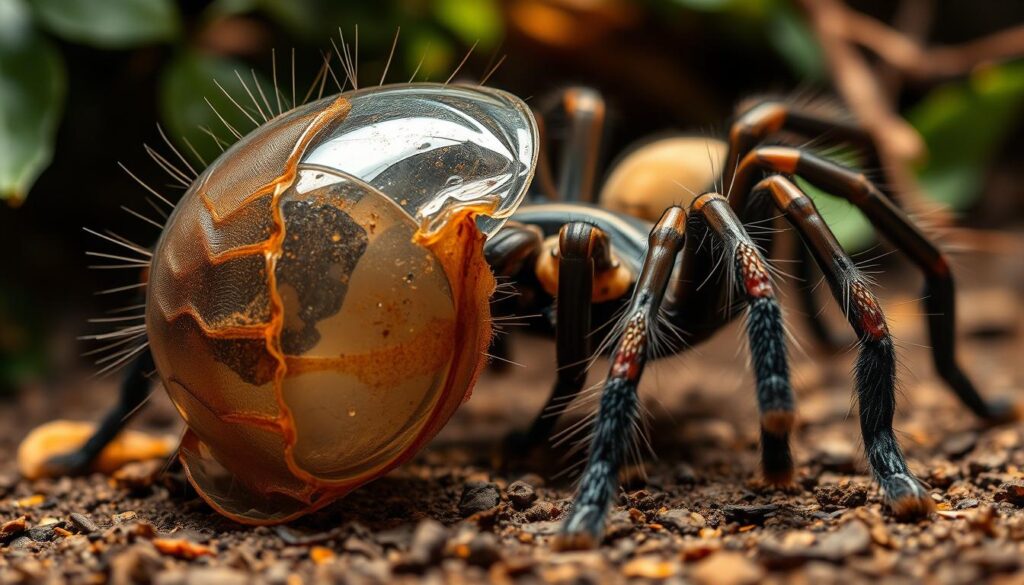
Why Tarantulas Shed Their Exoskeletons
Tarantulas shed their exoskeletons for several key reasons. Primarily, it allows them to grow larger. The exoskeleton does not grow with the tarantula; thus, molting is necessary to accommodate size increases. Additionally, molting enables tarantulas to repair or regenerate damaged or lost body parts, which is vital for their survival.
The Frequency of Molting Across Different Life Stages
The frequency of molting varies significantly across different life stages of a tarantula. Juvenile tarantulas molt more frequently than adults because they are growing rapidly. As tarantulas mature, the interval between molts increases. Understanding these differences is crucial for tarantula keepers to provide appropriate care.
For instance, young tarantulas may molt every few weeks, while adult tarantulas may only molt every few months or even years. Recognizing these patterns helps in monitoring the health and well-being of these fascinating creatures.
Identifying Behavioral Changes in Your Tarantula
The pre-molt phase in tarantulas is characterized by several notable changes in behavior, signaling that a molt is near. Recognizing these changes is crucial for tarantula owners to provide the appropriate care and environment. By understanding these behavioral shifts, you can better prepare your tarantula for a successful molt.
The Sudden Cessation of Feeding
One of the most common pre-molt behaviors is the sudden stop in feeding. Tarantulas typically lose their appetite as they prepare to molt, which can be a clear indicator that the molting process is approaching. This change in feeding habits is a natural part of the molting cycle.
It’s essential to stop offering live prey once you notice this change, as uneaten prey can cause stress and potentially harm your tarantula during the vulnerable molting period.
Increased Seclusion and Burrowing Habits
Tarantulas often become more reclusive and may exhibit increased burrowing behavior as they prepare to molt. This is a natural instinct to find a safe and secure location for the molting process. Providing a deep enough substrate can accommodate this behavior and help reduce stress.
Observing your tarantula’s burrowing habits can give you insight into its preparation for molting. Ensure the enclosure is set up to allow for this natural behavior.
Changes in Activity Levels and Movement Patterns
Another behavioral change to look out for is a shift in activity levels and movement patterns. Some tarantulas may become less active or move more slowly as they approach molting. This change can be subtle, so regular observation is key to noticing these shifts.
Monitoring these changes can help you anticipate and prepare for the molt, ensuring your tarantula has the best conditions for a successful process.
Physical Indicators of the Pre-Molt Phase
Tarantulas exhibit distinct physical signs as they approach molting, a natural process essential for their growth. These changes are critical for tarantula owners to recognize, as they signal the tarantula’s preparation for shedding its exoskeleton.
Darkening of the Abdomen
One of the most common pre-molt symptoms is the darkening of the tarantula’s abdomen. This change occurs due to the new exoskeleton forming underneath the old one, causing the abdomen to appear darker or even slightly swollen. Monitoring this change is crucial as it indicates that the molting process is imminent.
Loss of Urticating Hairs
Some tarantula species, particularly those with urticating hairs, may exhibit a loss or reduction of these hairs before molting. Urticating hairs are used for defense, and their loss can be a significant indicator of the pre-molt phase. It’s essential to be aware of the normal appearance of your tarantula to notice when changes occur.
Changes in the Shiny Appearance of the Carapace
The carapace, or the dorsal (top) part of the tarantula’s exoskeleton, often undergoes a change in appearance before molting. It may lose its usual shiny appearance and look duller or more matte. This change is due to the separation of the old exoskeleton from the new one underneath. Observing this change can help you anticipate the molting process.
Recognizing these physical indicators can significantly enhance your ability to care for your tarantula during the molting process. Here are some key signs to look out for:
- Darkening or swelling of the abdomen
- Loss or reduction of urticating hairs
- Dulling of the carapace’s shiny appearance
Environmental Adjustments During the Pre-Molt Period
As your tarantula approaches the pre-molt phase, it’s crucial to make specific environmental adjustments to ensure a smooth transition. This period is critical for your tarantula’s health, and the right conditions can significantly impact the success of the molt.
One of the key factors to consider is the humidity level in your tarantula’s enclosure. Maintaining optimal humidity is vital for a successful molt.
Maintaining Optimal Humidity Levels
Tarantulas require a specific humidity range to molt successfully. Increasing the humidity to the recommended level for your species can help facilitate the molting process. It’s essential to research the specific humidity requirements for your tarantula species to ensure you’re providing the best conditions.
A general rule of thumb is to maintain a humidity level that mimics your tarantula’s natural habitat. This can involve using a hygrometer to monitor the humidity and making adjustments as necessary.
The Importance of Avoiding Disturbance
Minimizing disturbance is another critical aspect of pre-molt care. Tarantulas are vulnerable during this period, and unnecessary disturbance can cause stress, potentially leading to complications during the molt.
It’s advisable to avoid handling your tarantula or making significant changes to its enclosure during the pre-molt phase. This will help reduce stress and create a more favorable environment for molting.
Why You Should Stop Offering Live Prey
Stopping the offering of live prey is a crucial environmental adjustment during the pre-molt period. Live prey can stress your tarantula and potentially cause injury, especially if the tarantula is not feeding due to its pre-molt state.
Ceasing to offer live prey will help minimize stress and reduce the risk of complications. It’s also a good practice to remove any uneaten prey from the enclosure to maintain cleanliness and reduce stressors.
Common Misconceptions About Pre-Molt Symptoms
Pre-molt symptoms in tarantulas are often misunderstood, leading to unnecessary stress for both the pet and the owner. Many owners are unaware of the subtle changes their tarantula undergoes before molting, mistaking these signs for illness or other issues. Understanding these symptoms is crucial for providing the best care.
Distinguishing Between Molting and Illness
One of the most common misconceptions is confusing pre-molt symptoms with illness. Tarantulas about to molt may stop eating, become less active, and exhibit changes in color or posture. Similarly, a sick tarantula may display lethargy and loss of appetite. However, there are key differences. A tarantula preparing to molt will typically not show signs of infection or injury, such as discharge, lethargy beyond the normal pre-molt inactivity, or loss of bodily functions.
Key differences between pre-molt and illness:
| Symptom | Pre-Molt | Illness |
|---|---|---|
| Appetite Loss | Common, usually stops a few days to a week before molting | Can be sudden or gradual, often accompanied by other signs |
| Activity Level | Decreased, often with increased burrowing | Can be decreased, but may also be erratic or increased in some cases |
| Visible Signs | Darkening abdomen, loss of urticating hairs | Discharge, mold, or fungus on the body, lethargy |
Recognizing Dehydration Versus Pre-Molt
Dehydration can be another concern that is often confused with pre-molt symptoms. A dehydrated tarantula may appear lethargic and have a shriveled abdomen. However, dehydration is usually accompanied by other signs such as a lack of webbing or a dry, wrinkled exoskeleton. In contrast, a tarantula preparing to molt may have a plumper abdomen due to fluid shift, not dehydration.
When to Seek Professional Advice
If you’re unsure whether your tarantula is about to molt or is ill, it’s always best to consult with a professional. Experienced breeders or veterinarians can provide guidance based on the specific symptoms and history of your tarantula. They can help you determine the best course of action and ensure your pet receives the care it needs.
Essential Tarantula Pre-Molt Signs to Monitor
Tarantulas exhibit specific behaviors and physical changes before molting, and being aware of these signs is vital. Recognizing these pre-molt signs allows owners to prepare a suitable environment, reducing stress and ensuring a successful molt.
Observing the Webbing Patterns
One of the key indicators of the pre-molt phase is a change in the tarantula’s webbing patterns. Tarantulas often increase their webbing activity before molting, creating a dense, intricate web around themselves. This behavior is a sign that the tarantula is preparing a safe and secure environment for the molting process.
Monitoring the Position of the Legs
Another important sign is the positioning of the tarantula’s legs. Before molting, tarantulas often tuck their legs close to their body, a behavior that is thought to be related to the preparation for the molt. Observing this change can help owners anticipate the molting process.
Tracking the Duration of the Pre-Molt Phase
The duration of the pre-molt phase can vary among different species and individuals. Monitoring the length of time your tarantula exhibits pre-molt behaviors can provide valuable insights into its molting cycle. This information can help owners better understand their tarantula’s needs and prepare accordingly.
Preparing the Enclosure for a Successful Molt
A well-prepared enclosure is essential for minimizing stress and ensuring a successful molt for your tarantula. As your tarantula approaches this critical phase, its environment plays a significant role in determining the outcome.
Removing Potential Hazards and Sharp Decor
One of the first steps in preparing the enclosure is to remove any potential hazards or sharp decorations that could cause injury during the molting process. Tarantulas are vulnerable when they molt, and any sharp object can cause damage to their new, soft exoskeleton.
- Remove any sharp rocks or decorations.
- Check for any rough surfaces that could cause injury.
- Ensure that there are no small objects that your tarantula could get entangled in.
Ensuring a Stress-Free Environment
Maintaining a stress-free environment is crucial during the pre-molt period. Stress can lead to complications and negatively impact the molting process.
Key factors to consider:
- Maintain optimal temperature and humidity levels.
- Avoid disturbing your tarantula or its enclosure.
- Ensure the enclosure is clean and free from any potential stressors.
“A stress-free environment is vital for the health and well-being of your tarantula, especially during the molting process.”
The Role of Proper Ventilation
Proper ventilation is essential for maintaining a healthy environment within the enclosure. Good airflow helps to prevent the buildup of moisture, which can lead to fungal or bacterial growth.
To ensure proper ventilation:
- Check that the enclosure has adequate ventilation holes.
- Ensure that the substrate is not too damp or wet.
- Monitor the humidity levels to prevent excessive moisture.
What to Do During and After the Molt
Understanding what to do during and after your tarantula molts is crucial for its health and survival. The molting process, although natural, is a vulnerable period for tarantulas, and proper care can significantly impact the outcome.
Signs That the Molting Process Has Begun
Recognizing the signs that indicate the start of molting is essential for providing the right care. One of the primary indicators is the tarantula’s cessation of feeding and increased seclusion. As the molting process begins, your tarantula may also exhibit a darkening of the abdomen and a loss of urticating hairs. It’s crucial to minimize disturbance during this period to avoid causing unnecessary stress.
“Molting is a critical phase in a tarantula’s life, and improper handling can lead to complications,” as noted by arachnid experts. Ensuring a stress-free environment is vital.
The Critical Post-Molt Recovery Period
After the molt, your tarantula will be vulnerable until its new exoskeleton hardens. This post-molt recovery period is critical, and maintaining optimal humidity levels is essential to prevent dehydration and support the hardening process.
- Maintain the enclosure’s humidity levels as recommended for your tarantula species.
- Avoid handling your tarantula until its exoskeleton is fully hardened.
- Keep the enclosure clean and free from potential hazards.
When to Resume Feeding After the Exoskeleton Hardens
Resuming feeding should be done cautiously. It’s generally recommended to wait until the tarantula’s exoskeleton is fully hardened before offering food again. This period can vary depending on the species and environmental conditions. Observing your tarantula’s behavior and physical condition will help determine the right time to resume feeding.
As a rule of thumb, waiting at least a week after the molt is common practice, but this can vary. It’s also important to monitor your tarantula’s appetite and overall health before reintroducing food.
Conclusion
Recognizing tarantula pre-molt signs is crucial for providing the best possible tarantula care. By understanding the biological necessity of molting, identifying behavioral and physical changes, and making necessary environmental adjustments, you can ensure a successful molting process.
Throughout this guide, we’ve explored the key indicators that signal your tarantula is preparing to molt, including changes in feeding habits, increased seclusion, and physical signs such as a darkening abdomen. By being aware of these tarantula pre-molt signs, you can take steps to create a stress-free environment that supports your tarantula through this critical period.
Proper tarantula care during the molting process involves more than just recognizing pre-molt signs. It requires a comprehensive approach that includes preparing the enclosure, avoiding disturbance, and resuming feeding at the appropriate time. By following these guidelines, you can help ensure your tarantula emerges from its molt healthy and strong.