
Have you ever wondered why your vibrant, semi-terrestrial pets seem to thrive one day and struggle the next? Many enthusiasts are drawn to the Geosesarma species for their striking colors and small size. However, the common belief that they are low-maintenance pets often leads to significant frustration.
The reality is that these unique crustaceans require specific environmental conditions to truly flourish. Without a proper setup that mimics their natural habitat, owners often fall into common vampire crab care mistakes that jeopardize the health of their colony.
Understanding the delicate balance of land and water is essential for any successful keeper. By addressing these foundational oversights early, you can ensure your vampire crab lives a long, active life in your home aquarium. This guide provides the expert insights needed to navigate the complexities of keeping these fascinating animals.
Key Takeaways
- Recognize that these animals are semi-terrestrial and require both land and water zones.
- Maintain stable water quality to prevent stress and health issues.
- Provide a varied diet to ensure proper molting and growth.
- Avoid overcrowding to reduce territorial aggression among the group.
- Monitor humidity levels closely to support healthy respiration and activity.
Understanding the Unique Needs of Geosesarma Crabs
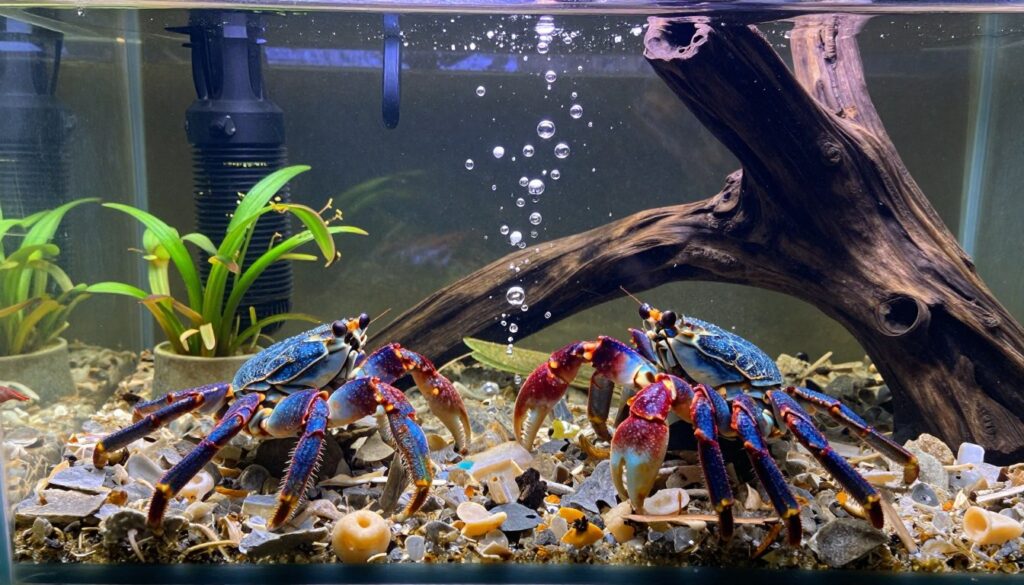
Many hobbyists struggle with their pets because they overlook the unique physiological requirements of these crustaceans. Geosesarma species, commonly known as Vampire Crabs, originate from the lush, tropical regions of Southeast Asia. To keep them healthy, you must move beyond basic aquarium knowledge and embrace a more specialized approach to avoid common vampire crab care errors.
These fascinating creatures are not fully aquatic, which is a frequent point of confusion for new owners. They require a carefully balanced paludarium setup that mimics their natural riverbank and forest floor environment. By providing both land and water, you allow the crabs to exhibit their natural behaviors, such as burrowing and foraging.
Replicating their native habitat is the most effective way to ensure long-term survival. When the environment fails to meet their specific needs, the animals often experience stress, which leads to poor health outcomes. Understanding these biological demands is the first step toward preventing common vampire crab care errors and fostering a thriving colony.
| Feature | Natural Habitat | Captive Requirement |
|---|---|---|
| Environment | Tropical Rainforest | Paludarium |
| Water Type | Freshwater Streams | Low-flow/Clean |
| Land Access | High Availability | 70% Land Surface |
| Humidity | High/Constant | Above 80% |
Consistency is the key to success when managing these delicate animals. By prioritizing their need for high humidity and clean, shallow water, you create a stable foundation for their growth. Taking the time to learn these requirements now will save you from significant frustration later.
Common Vampire Crab Care Mistakes That Lead to Failure
Success with these unique crustaceans often hinges on avoiding vampire crab care mistakes that frequently lead to failure. Many hobbyists attempt to keep these animals using standard fish-keeping methods, which often results in poor health outcomes. Transitioning to a semi-terrestrial setup requires a fundamental shift in how you manage your enclosure.
Recognizing common vampire crab care errors early is the most effective way to ensure your colony thrives. When owners fail to adapt their management strategies, the crabs often suffer from stress or environmental instability. Proactive adjustments are essential for maintaining a healthy, long-term population.
The following table highlights the critical differences between standard aquarium maintenance and the specific needs of Geosesarma species. Understanding these distinctions helps prevent the most frequent pitfalls encountered by beginners.
| Management Area | Common Mistake | Corrective Strategy |
|---|---|---|
| Water Depth | Deep water tanks | Shallow, land-heavy setups |
| Humidity | Dry, open-top tanks | High humidity with lids |
| Diet | Fish flakes only | Diverse protein and plant matter |
By identifying these vampire crab care mistakes before they impact your colony, you create a stable environment. Consistent monitoring allows you to catch common vampire crab care errors before they become life-threatening. Focus on these core areas to provide the high-quality care your crabs deserve.
Step One: Providing Inadequate Land-to-Water Ratios
If you want to avoid these vampire crab care blunders, you must start with the physical layout of your tank. These creatures are semi-terrestrial, meaning they require a specific balance of land and water to thrive. Failing to provide this balance often leads to unnecessary stress and health complications.
Calculating the Ideal 70/30 Split
The gold standard for a healthy enclosure is a 70% land to 30% water ratio. This configuration ensures that your crabs have ample space to burrow and forage on solid ground while still having access to a hydration zone. You should design the land portion using a mix of substrate that holds moisture well.
The water section should be shallow and easily accessible from the land area. By maintaining this specific ratio, you create a naturalistic environment that mimics their native habitat. This setup is essential to help you avoid these vampire crab care blunders that often plague inexperienced keepers.
Why Deep Water Can Be Fatal for Vampire Crabs
One of the most dangerous mistakes is providing a deep water pool. Vampire crabs are not strong swimmers and can easily drown if they cannot find a way to climb out of the water. Their anatomy is built for crawling across damp surfaces rather than navigating deep aquatic environments.
Always ensure that the transition from water to land is gradual. Use rocks, driftwood, or specialized ramps to create a safe exit path for your crabs. By prioritizing shallow water zones, you protect your pets from physical injury and ensure they remain comfortable in their home.
Step Two: Neglecting Water Quality and Filtration Standards
Maintaining pristine water quality is a cornerstone of successful paludarium management. Because these crabs inhabit small, semi-aquatic environments, the water volume is often limited, making it highly susceptible to rapid chemical shifts. To avoid these vampire crab care blunders, you must prioritize a stable and clean aquatic zone from the very beginning.
The Importance of Low-Flow Filtration
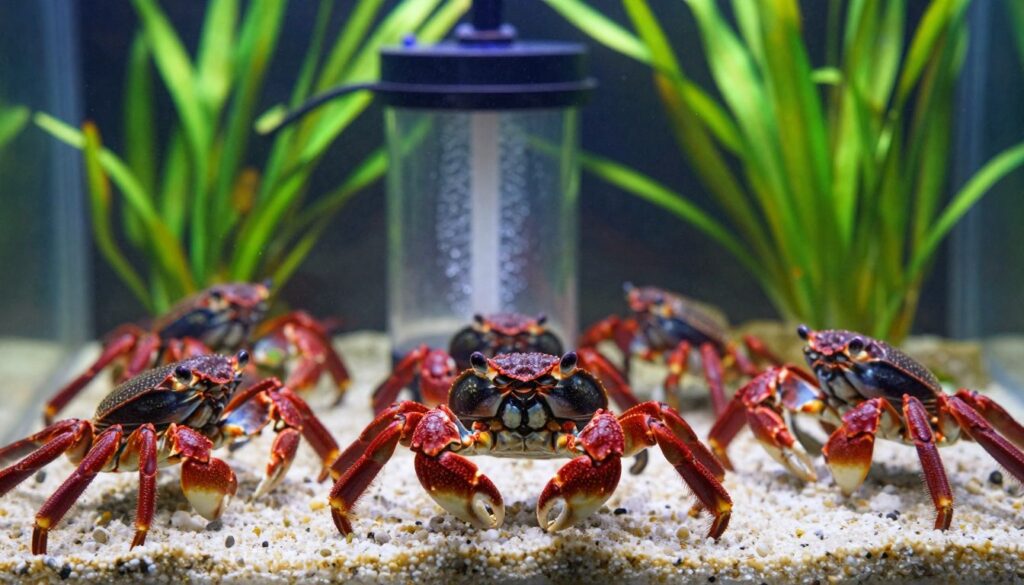
Vampire crabs are not strong swimmers and can easily become stressed or physically exhausted by strong currents. A high-flow filter designed for standard fish tanks will likely overwhelm your crabs, forcing them to avoid the water entirely. Selecting a gentle, low-flow filtration system is essential to keep the water moving without creating a turbulent environment.
Internal sponge filters or small, adjustable power filters are often the best choices for these setups. These options provide enough circulation to prevent stagnant water while ensuring the crabs can navigate the aquatic area safely. Proper flow control allows for effective waste removal while respecting the natural behavior of your Geosesarma species.
Managing Ammonia and Nitrates in Small Volumes
In a small water volume, nitrogenous waste can accumulate quickly, leading to dangerous spikes in ammonia and nitrates. These toxins are invisible but can be fatal to your crabs if left unchecked. Regular, partial water changes are the most effective way to maintain a healthy balance and prevent long-term health issues.
Biological filtration is equally important, as it provides a home for beneficial bacteria that break down harmful waste products. You should monitor your water parameters consistently to ensure the environment remains stable. By staying proactive with your maintenance schedule, you can easily avoid these vampire crab care blunders and ensure your crabs thrive in their habitat.
Step Three: Failing to Maintain Proper Humidity Levels
One of the most common top vampire crab care missteps involves failing to regulate the moisture levels within the enclosure. These small crustaceans rely on high humidity to support their delicate respiratory systems. Without a stable, damp environment, these creatures face significant health risks, including dehydration and failed molting cycles.
Monitoring Humidity with Digital Hygrometers
Relying on guesswork is a recipe for disaster when managing a tropical paludarium. You should always use a digital hygrometer to track the exact moisture levels inside the tank. These devices provide the precision needed to ensure your habitat remains within the ideal range, typically between 75% and 90% relative humidity.
Consistency is the key to success when keeping these sensitive animals. By checking your readings daily, you can catch fluctuations before they become a problem. If the numbers drop too low, you must act quickly to restore the necessary moisture balance.
Techniques for Retaining Moisture in Enclosures
Creating a sealed environment is the most effective way to lock in humidity. Using a tight-fitting glass lid prevents moisture from escaping into the room air. This simple barrier is often enough to maintain a stable microclimate for your crabs.
If your setup still feels too dry, consider implementing a regular misting schedule or an automated misting system. Adding live mosses and dense tropical plants also helps retain water within the substrate. These methods help you avoid the top vampire crab care missteps that often lead to unnecessary stress or mortality in captive populations.
Step Four: Choosing the Wrong Substrate for Burrowing
Many keepers overlook the importance of the substrate, which is one of the top vampire crab care missteps. Providing a proper foundation is essential because these crustaceans rely on the ground to feel secure and exhibit natural behaviors. When the soil is incorrect, your crabs may become stressed or fail to thrive in their new environment.
Selecting Safe Soil and Coco Fiber Mixes
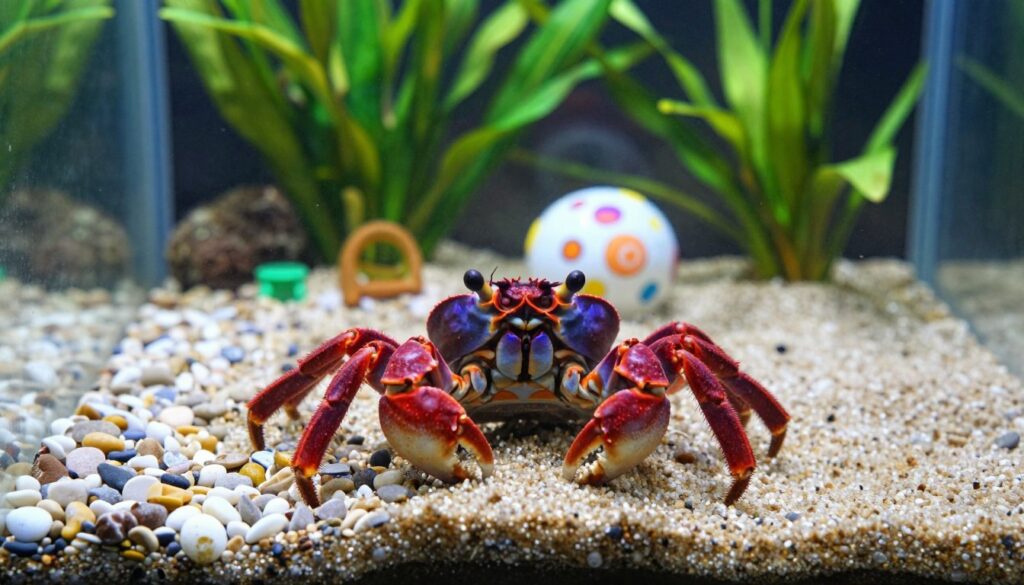
The ideal substrate should hold moisture well while remaining loose enough for digging. Organic coco fiber is widely considered the gold standard for these setups. It is lightweight, retains humidity effectively, and provides a soft texture that is gentle on the crabs’ delicate legs.
You can also use high-quality peat moss or a blend of coco fiber and sphagnum moss. These materials mimic the natural forest floor where these species originate. Always ensure the substrate is damp but not waterlogged to prevent bacterial growth.
Avoiding Toxic Fertilizers and Additives
One of the most dangerous errors is using standard potting soil from a garden center. These products often contain harmful fertilizers, pesticides, or perlite that can be lethal to small invertebrates. Even small amounts of chemical additives can cause long-term health issues or sudden death.
Always check the label to ensure the product is 100% organic and free of synthetic chemicals. If you are unsure about a specific brand, it is safer to avoid it entirely. Using the wrong material is a classic example of the top vampire crab care missteps that can easily be avoided with careful research.
| Substrate Type | Safety Level | Best Use |
|---|---|---|
| Organic Coco Fiber | High | Primary burrowing medium |
| Sphagnum Moss | High | Humidity retention |
| Potting Soil with Perlite | Low | Avoid completely |
| Garden Soil with Fertilizer | Low | Avoid completely |
Step Five: Overlooking Dietary Diversity and Nutritional Needs
Proper feeding habits are essential to avoid common vampire crab care pitfalls to steer clear of. Many new owners mistakenly assume that these crustaceans can survive on a single food source, but they actually require a varied, omnivorous diet to maintain peak health.
Balancing Proteins and Plant Matter
A healthy diet for your crabs should consist of a mix of high-quality proteins and fresh plant matter. You should offer a rotation of commercial sinking pellets, frozen bloodworms, and brine shrimp to ensure they receive necessary amino acids.
Do not forget to supplement these proteins with blanched vegetables like zucchini, spinach, or carrots. Variety is the key to preventing nutritional deficiencies that often lead to stunted growth or weakened immune systems in captive populations.
The Role of Calcium for Successful Molting
Calcium is a critical component for the development of a strong exoskeleton. Without adequate calcium intake, your crabs may struggle to shed their old shells, which is one of the most dangerous vampire crab care pitfalls to steer clear of during their life cycle.
If a crab cannot complete its molt, it often leads to fatal complications. You can easily boost calcium levels by providing cuttlebone, crushed eggshells, or specialized mineral-rich pellets. Consistent supplementation ensures that your crabs remain resilient and healthy throughout every stage of their growth.
Step Six: Ignoring Social Dynamics and Group Housing
One of the most common vampire crab care pitfalls to steer clear of is the failure to recognize the complex social needs of these crustaceans. While they may appear small and unassuming, these animals maintain a strict hierarchy that dictates their daily behavior. Ignoring these dynamics often leads to unnecessary stress, which can compromise the health of your entire colony.
Managing Male-to-Female Ratios
A balanced population is the foundation of a peaceful enclosure. It is generally recommended to keep a higher ratio of females to males to prevent excessive harassment. When there are too many males in a confined space, competition for mates becomes intense and often turns violent.
Careful observation is required during the first few weeks of introducing new individuals. If you notice a specific male constantly pursuing others, you may need to rehome him or adjust the group size. Maintaining a ratio of at least two females for every male helps distribute attention and keeps the group stable.
Preventing Territorial Aggression in Small Tanks
Territorial disputes are a natural part of crab behavior, but they can escalate quickly in cramped quarters. In small tanks, subordinate individuals may find themselves trapped without a safe place to retreat, leading to injury or even death. Providing ample hiding spots is the most effective way to mitigate this risk.
You should incorporate plenty of vertical space using driftwood, rocks, and dense planting. This allows lower-ranking crabs to escape the line of sight of dominant individuals. By creating a complex environment with multiple levels, you ensure that every crab has a private sanctuary, which is essential for long-term harmony in your setup.
Step Seven: Mismanaging Temperature and Seasonal Fluctuations
Achieving the perfect climate is one of the most important vampire crab care pitfalls to steer clear of. While these creatures are resilient, they rely on consistent environmental conditions to maintain their metabolic health. Sudden shifts in ambient room temperature can disrupt their natural cycles and lead to long-term stress.
Ideal Temperature Ranges for Geosesarma Species
Most Geosesarma species originate from tropical regions where temperatures remain relatively stable throughout the year. To replicate this, keepers should aim to keep their enclosures between 72°F and 80°F. Staying within this specific window ensures that the crabs remain active and exhibit natural foraging behaviors.
Consistent warmth supports the digestive processes of these crustaceans. When temperatures drop below this range, crabs often become lethargic and may stop eating entirely. Utilizing a reliable digital thermometer is essential for tracking these fluctuations in real-time.
“Environmental stability is the silent partner in successful invertebrate keeping; without it, even the best diet cannot compensate for the physiological strain of thermal inconsistency.”
Avoiding Overheating in Tropical Setups
While cold is a concern, overheating is equally dangerous and often fatal. High temperatures accelerate the metabolism of the crab, leading to rapid exhaustion and premature death. It is vital to avoid placing enclosures in direct sunlight or near heat vents that cause spikes in the internal climate.
If you use heating mats or lamps, always connect them to a thermostat controller to prevent runaway heating. Monitoring your setup during the summer months is a key part of avoiding common vampire crab care pitfalls to steer clear of. Proper ventilation also helps dissipate excess heat, ensuring the air remains fresh and cool.
| Temperature Range | Crab Response | Recommended Action |
|---|---|---|
| Below 70°F | Lethargy | Increase ambient heat |
| 72°F – 80°F | Optimal Activity | Maintain current settings |
| Above 85°F | Metabolic Stress | Improve ventilation |
Essential Equipment for a Thriving Vampire Crab Paludarium
Building a successful paludarium requires more than just a tank and some water. The hardware you select serves as the foundation for a stable, healthy environment where your crabs can thrive. By prioritizing quality equipment, you create a self-sustaining ecosystem that minimizes maintenance and maximizes the well-being of your pets.
Choosing the Right Enclosure Size
Selecting the correct enclosure is the most critical decision for any keeper. A tank that is too small makes it difficult to maintain the necessary land-to-water ratio, while an oversized tank can be challenging to monitor. Aim for a minimum of 10 to 20 gallons to ensure there is enough space for both terrestrial and aquatic zones.
Proper ventilation is equally vital for the health of your crabs. You should look for enclosures that offer the following features:
- Secure lids to prevent escapes while allowing for airflow.
- Front-opening doors for easy access during cleaning and feeding.
- Adequate depth to accommodate a deep substrate layer for burrowing.
Lighting Requirements for Live Plants
Healthy vegetation is essential for the biological stability of your setup. Live plants help regulate oxygen levels and provide natural hiding spots, but they require specific lighting to flourish. Investing in a high-quality LED light fixture designed for planted tanks will make a significant difference in your success.
When choosing your lighting, consider these factors to ensure your plants receive the right spectrum:
- Full-spectrum LEDs: These mimic natural sunlight and support photosynthesis.
- Adjustable intensity: This allows you to prevent algae growth by fine-tuning the light levels.
- Timer compatibility: Consistent light cycles are crucial for both plant health and the natural rhythm of your crabs.
By balancing these equipment choices, you create a professional-grade habitat that supports long-term growth. A well-equipped paludarium is not just a home for your crabs; it is a living piece of art that rewards your attention to detail.
Conclusion
Creating a thriving habitat for Geosesarma crabs requires a blend of precision and patience. Success hinges on your ability to maintain environmental stability while meeting the specific biological needs of your colony.
Consistent monitoring of water quality and humidity levels prevents many common health issues. Providing a varied diet ensures your crabs receive the essential nutrients required for healthy molting cycles. Proper social management keeps territorial stress at a minimum within your paludarium.
These small, vibrant creatures reward attentive keepers with fascinating behaviors and active displays. Your commitment to these details transforms a basic enclosure into a flourishing ecosystem. Use these insights to refine your setup and observe your colony grow over time.
Expertise in this hobby develops through observation and steady adjustments. Share your experiences with fellow enthusiasts to help build a stronger community of crab keepers. Your dedication to quality care sets the standard for a healthy and vibrant home for your Geosesarma species.