
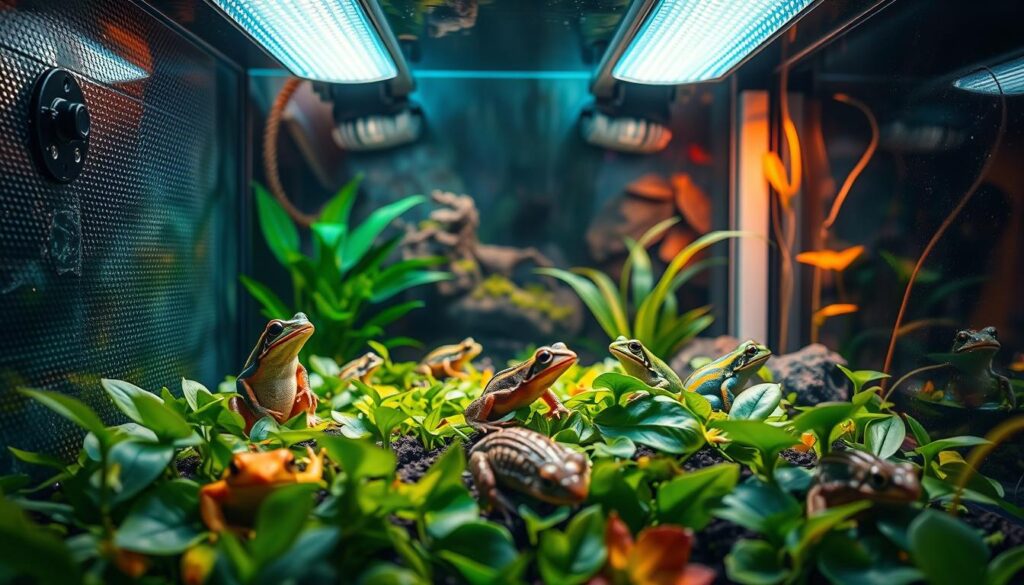
Have you ever wondered if your pet amphibian is truly thriving or merely surviving in its enclosure? Many keepers focus on humidity and temperature, yet they often overlook the critical role of specialized radiation.
Providing proper uvb lighting is not just an optional upgrade for your terrarium. It is a fundamental requirement for the long-term health and metabolic function of many species.
Replicating natural environmental conditions serves as the cornerstone of responsible husbandry. By integrating uvb lighting into your setup, you help ensure your animals maintain strong bone density and healthy immune systems.
Understanding these biological needs allows you to create a habitat that mirrors the wild. This proactive approach prevents common deficiencies and promotes a vibrant, active life for your captive companions.
Key Takeaways
- Proper radiation is essential for metabolic health in amphibians.
- Artificial sources help prevent common bone and immune deficiencies.
- Replicating natural environments is a core pillar of responsible care.
- Consistent exposure supports natural behaviors and overall vitality.
- Expert husbandry requires balancing light, heat, and humidity levels.
Understanding the Biological Necessity of UVB Lighting
The physiological reliance of amphibians on specific light spectrums is a fascinating aspect of their care. While many keepers focus primarily on humidity and temperature, the quality of light plays a critical role in long-term vitality. Implementing proper uvb lighting ensures that these sensitive creatures receive the environmental cues necessary for their survival.
The Role of Vitamin D3 Synthesis in Amphibians
Amphibians, much like reptiles, require ultraviolet radiation to facilitate the production of essential nutrients. Through the process of uvb vitamin d synthesis, their skin converts light energy into a form that allows for proper calcium absorption. Without this natural mechanism, even a diet rich in calcium will fail to support the animal’s skeletal structure.
“Light is the silent architect of health for captive amphibians, dictating metabolic success and structural integrity.”
Metabolic Bone Disease and UVB Deficiency
One of the most significant uvb benefits is the prevention of Metabolic Bone Disease (MBD). This debilitating condition occurs when an amphibian cannot process calcium effectively, leading to soft bones, tremors, and eventual organ failure. Providing consistent exposure to the correct spectrum acts as a vital safeguard against this common ailment.
The following table outlines the correlation between light exposure and physiological health outcomes in captive environments:
| Factor | Without UVB | With Proper UVB |
|---|---|---|
| Calcium Absorption | Poor/Inefficient | Optimal |
| Bone Density | Weak/Brittle | Strong/Healthy |
| Metabolic Rate | Sluggish | Active/Regulated |
| Disease Risk | High (MBD) | Low |
Natural Habitat Mimicry and Circadian Rhythms
Beyond internal chemistry, light serves as a primary regulator for an amphibian’s internal biological clock. By mimicking the natural cycles of their native habitats, keepers can encourage healthy activity levels and reproductive behaviors. Utilizing uvb lighting to establish a clear day-night cycle helps reduce stress and promotes natural movement patterns.
When amphibians experience consistent light cycles, they exhibit more natural foraging and resting habits. This rhythmic stability is essential for maintaining a thriving population in captivity. By prioritizing uvb vitamin d production and natural light cycles, you provide the foundational uvb benefits required for a long and healthy life.
Selecting the Right UVB Lighting for Your Species
Providing appropriate illumination requires a clear understanding of the specific needs of your amphibian species. While many keepers focus on humidity and temperature, uvb lighting serves as the invisible engine for metabolic health. Selecting the correct equipment ensures that your animals receive the precise spectrum required for their biological functions.
Differentiating Between Fluorescent and Mercury Vapor Bulbs
When shopping for uvb bulbs, you will primarily encounter two distinct technologies. Linear fluorescent tubes are often preferred for their consistent, low-intensity output across the entire length of an enclosure. These uvb lamps are ideal for species that require moderate exposure without the risk of excessive heat buildup.
In contrast, mercury vapor bulbs provide both intense light and significant heat. These are generally reserved for larger enclosures where a high-intensity basking zone is necessary. Because they produce more heat, they require careful monitoring to prevent thermal stress in sensitive amphibians.
Understanding UV Index Requirements for Different Amphibian Families
Different species have evolved to thrive under varying levels of solar radiation. A tropical forest dweller, for instance, requires a much lower UV Index (UVI) than a species native to open, arid environments. You must research the specific natural history of your pet to determine the appropriate uvb reptile light intensity.
Using a high-output bulb for a shade-loving species can lead to severe health complications. Always prioritize the natural habitat of your animal when selecting your equipment. Matching the UVI output to the species’ requirements is the most effective way to ensure long-term safety.
Evaluating Bulb Strength and Distance Requirements
The effectiveness of your uvb lamps depends heavily on the distance between the light source and the animal. As the distance increases, the intensity of the radiation drops significantly. You should always consult the manufacturer’s guidelines to determine the optimal mounting height for your specific uvb reptile light.
Using a mesh top on your enclosure will also filter out a portion of the output. It is vital to account for this reduction when calculating the distance. Regular testing ensures that your uvb bulbs are delivering the intended levels of radiation to the enclosure floor.
| Bulb Type | Best Use Case | Heat Output | Primary Benefit |
|---|---|---|---|
| Linear Fluorescent | Small to Medium Tanks | Minimal | Even UV distribution |
| Compact Fluorescent | Small Enclosures | Low | Targeted exposure |
| Mercury Vapor | Large/Deep Enclosures | High | Combined heat and UV |
Preparing the Enclosure for Proper UVB Exposure
Achieving the perfect balance of light within an enclosure requires careful planning and attention to detail. When you design a habitat, you must ensure that uvb exposure reaches your amphibian effectively. Without a thoughtful setup, even the best bulbs may fail to provide the necessary benefits for your pet.
Assessing Tank Depth and Mesh Top Interference
The physical structure of your tank plays a major role in how light penetrates the environment. Many enclosures feature mesh tops that act as a physical barrier, often filtering out a significant percentage of light. You should measure the distance from the bulb to the animal’s basking spot to account for this reduction.
If your tank is deep, the intensity of the light will naturally decrease as it travels downward. Always verify the output at the floor level to ensure your amphibian receives adequate radiation. Adjusting the distance or using a more powerful bulb can help compensate for these structural limitations.
| Mesh Type | Light Blockage | Recommended Action |
|---|---|---|
| Fine Metal Screen | 30% – 50% | Increase bulb power |
| Coarse Plastic Mesh | 10% – 20% | Standard positioning |
| Open Top | 0% | Monitor for safety |
Creating Effective Photogradient Zones
Amphibians thrive when they can regulate their own uvb exposure by moving between different areas of the tank. You should create a clear photogradient by placing the light source at one end of the enclosure. This allows the animal to choose between high-intensity zones and shaded, cooler areas.
Providing these options mimics the natural behavior of amphibians in the wild. By moving in and out of the light, they can synthesize Vitamin D3 without the risk of overheating. Ensure that your setup includes plenty of foliage or hides in the shaded zones to facilitate this natural movement.
Positioning Lighting to Prevent Overexposure
While light is essential, you must prioritize safety to prevent the dangers of excessive radiation. Proper positioning involves maintaining a safe distance between the bulb and the animal’s primary activity area. Overexposure can lead to skin damage or stress, so it is vital to follow the manufacturer’s guidelines for your specific bulb type.
- Use a reliable UV index meter to check intensity levels.
- Ensure the light is mounted securely to prevent accidental falls.
- Create a buffer zone where the animal can retreat completely from the light.
By carefully managing the placement of your lighting system, you provide a healthy and stable environment. Consistent monitoring ensures that your amphibian remains active and vibrant throughout its life.
Step-by-Step Installation of UVB Lighting Systems
Once you have selected your equipment, the next phase involves a methodical installation process to guarantee safety and performance. Proper hardware placement ensures that your amphibian receives the correct intensity of light without risking exposure to harmful levels of radiation. Following a structured approach helps maintain a stable environment that mimics natural conditions.
Mounting Fixtures Securely Above the Enclosure
The physical mounting of your lighting fixture is the foundation of a successful setup. You must ensure the unit is firmly attached to the top of the enclosure or a dedicated stand to prevent accidental falls. If you are using a mesh top, verify that the screen does not block too much of the light output, as some materials can filter out significant amounts of UVB.
- Use heavy-duty mounting brackets or hanging kits for overhead stability.
- Ensure the fixture is centered to provide an even distribution of light.
- Check that the power cord is secured away from water sources to prevent electrical hazards.
Connecting Timers for Consistent Day-Night Cycles
Amphibians rely on predictable light cycles to regulate their biological functions and reduce stress. Manual switching is often inconsistent, which can disrupt the animal’s natural circadian rhythm. Automated timers are essential tools that provide a reliable schedule for your lighting system.
By setting a consistent photoperiod, you create a sense of security for your pet. Most species thrive on a 12-hour light and 12-hour dark cycle, though you should adjust this based on the specific needs of your animal. A simple digital or mechanical timer ensures that the lights turn on and off at the exact same time every day.
Testing Output with a UV Index Meter
Visual inspection is never enough to confirm that your UVB bulb is functioning correctly. Over time, bulbs can lose their effectiveness even if they still emit visible light. Using a UV Index meter is the only way to verify that your equipment is performing within safe and beneficial parameters.
Take measurements at the exact spot where your amphibian spends most of its time. If the readings are too high, you may need to increase the distance between the bulb and the animal. Conversely, if the output is too low, you might need to move the fixture closer or replace the bulb to ensure your pet receives the necessary health benefits.
Safety Protocols for Amphibian UVB Treatment
While artificial light provides vital health benefits, owners must prioritize safety to prevent potential injuries. Implementing a controlled environment ensures that your pet receives the necessary radiation without the risk of harm. Proper management of these systems is the key to long-term success.
Preventing Thermal Burns and Eye Damage
Amphibians are highly sensitive to both heat and intense radiation. To avoid thermal burns, always maintain the manufacturer’s recommended distance between the bulb and the animal’s highest climbing point. Overexposure can lead to severe skin damage or ocular issues if the light source is placed too close to the enclosure.
Ensure that all bulbs are housed in protective fixtures with mesh screens that allow for proper ventilation. Never allow the animal to make direct contact with the glass surface of the bulb. This simple precaution prevents accidental burns and keeps your pet safe during uvb light therapy.
Ensuring Adequate Hiding Spots and Shade
Providing a naturalistic environment is essential for allowing your pet to self-regulate its uvb exposure. You should create a gradient that includes both bright, illuminated zones and deep, shaded retreats. This allows the animal to move away from the light whenever it feels the need to rest.
Use cork bark, dense foliage, or hollow logs to create these dark areas. By offering a choice, you empower the animal to manage its own health needs naturally. A well-designed habitat ensures that uvb treatment remains a positive experience rather than a source of stress.
Monitoring Behavior for Signs of Stress or Overexposure
Consistent observation is the best way to gauge the effectiveness of your lighting setup. If you notice your amphibian spending all its time hiding or showing signs of lethargy, the intensity of the light may be too high. Conversely, excessive activity or frantic attempts to escape the enclosure can also indicate discomfort.
Watch for changes in skin color or unusual basking patterns that deviate from normal behavior. If you suspect that your pet is suffering from excessive uvb exposure, adjust the distance of the fixture or reduce the duration of the daily cycle. Always consult with a veterinarian if you notice persistent signs of distress.
Integrating UVB Exposure with Proper Supplementation
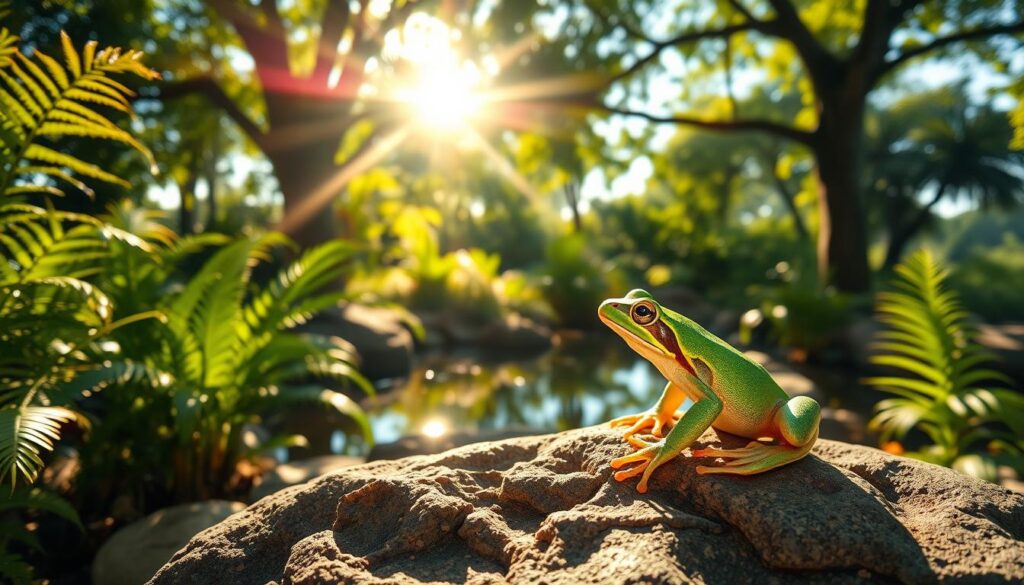
Mastering the relationship between light and supplements is a cornerstone of responsible amphibian husbandry. While many keepers focus solely on diet, the synergy between environmental lighting and internal nutrient processing is what truly drives long-term health. Proper uvb exposure acts as the catalyst that allows your animal to synthesize Vitamin D3, which is essential for calcium absorption.
Balancing Dietary Calcium and Vitamin D3
Calcium is vital for skeletal strength, but it cannot be utilized effectively without adequate Vitamin D3. When you provide consistent uvb exposure, you enable the amphibian to produce this hormone naturally within its skin. This process reduces the reliance on synthetic additives and mimics the biological reality of their native environments.
It is important to remember that light therapy does not replace the need for a high-quality diet. Instead, it serves as a biological bridge that ensures the calcium provided in food is actually absorbed into the bloodstream. Without this light, even the most calcium-rich diet may fail to prevent metabolic issues.
Avoiding Toxicity Through Excessive Supplementation
While supplements are necessary, more is not always better. Over-supplementing with synthetic Vitamin D3 can lead to dangerous toxicity levels, especially when combined with high-intensity lighting. You must monitor your animal closely to ensure that the total intake remains within a safe, physiological range.
The goal is to create a balanced environment where uvb exposure does the heavy lifting for vitamin synthesis. By relying on natural light processes, you minimize the risk of hypervitaminosis. Always consult the specific guidelines for your species to determine the correct frequency for dusting food items.
Adjusting Regimens Based on Species-Specific Needs
Every amphibian species has evolved to thrive under different light intensities and dietary requirements. A tropical tree frog will have vastly different needs compared to a terrestrial toad. You should tailor your supplementation strategy to match the natural activity patterns and habitat of your specific pet.
Regular observation is the best tool for fine-tuning these regimens. If your amphibian shows signs of lethargy or poor appetite, it may be time to re-evaluate both your lighting output and your dusting schedule. By staying flexible and informed, you provide the optimal conditions for your animal to flourish.
Maintenance and Replacement Schedules for UVB Bulbs
Even the highest quality lighting requires a consistent maintenance routine to remain effective. Many hobbyists mistakenly believe that if a light is still glowing, it is still providing the necessary radiation for their pets. However, uvb bulbs often lose their ability to emit essential ultraviolet rays long before they actually burn out.
Tracking Bulb Degradation Over Time
The chemical phosphors inside these lamps degrade steadily with every hour of use. While the visible light output may appear unchanged to the human eye, the invisible UV spectrum diminishes significantly over time. Monitoring the age of your equipment is the only way to ensure your amphibians are not suffering from silent deficiencies.
Establishing a Replacement Calendar for Optimal Output
To maintain a healthy environment, you should establish a strict replacement schedule. Most manufacturers recommend replacing uvb lamps every six to twelve months, depending on the specific brand and daily usage hours. Keeping a digital or physical log helps you track exactly when a bulb was installed, preventing you from relying on expired equipment.
Consistency is the key to preventing metabolic issues in your animals. By marking your calendar in advance, you ensure that fresh, high-output lighting is always available. Proactive replacement is far more cost-effective than treating health complications caused by inadequate lighting.
Cleaning Reflectors and Fixtures for Maximum Efficiency
Dust and debris accumulation on your reflectors can drastically reduce the amount of light reaching your enclosure. Even a thin layer of grime acts as a barrier, blocking vital rays from penetrating the tank. You should wipe down your reflectors and fixtures with a dry, lint-free cloth at least once a month.
Avoid using harsh chemical cleaners, as residue can be harmful to sensitive amphibian skin. A simple, gentle wipe keeps the reflective surface clean and ensures that the maximum amount of light is directed downward. Regular maintenance of your hardware is a simple habit that significantly improves the overall performance of your setup.
Troubleshooting Common UVB Lighting Issues
Troubleshooting your habitat lighting is a vital skill for every dedicated amphibian keeper. Even high-quality uvb lighting systems can experience performance drops or technical failures over time. Proactive maintenance ensures your animals remain healthy and active within their enclosures.
Identifying Flickering or Faulty Ballasts
Flickering lights are often the first sign of a failing ballast or a loose connection. If you notice your bulb blinking, check the fixture seating and ensure the power cord is secure. Faulty ballasts can cause inconsistent output, which may stress your amphibians over long periods.
If the flickering persists after checking connections, the ballast itself may be reaching the end of its lifespan. Replacing the unit promptly prevents potential electrical hazards and restores stable light levels. Always use compatible components to maintain the integrity of your uvb lighting setup.
Addressing Inadequate UV Output in Deep Enclosures
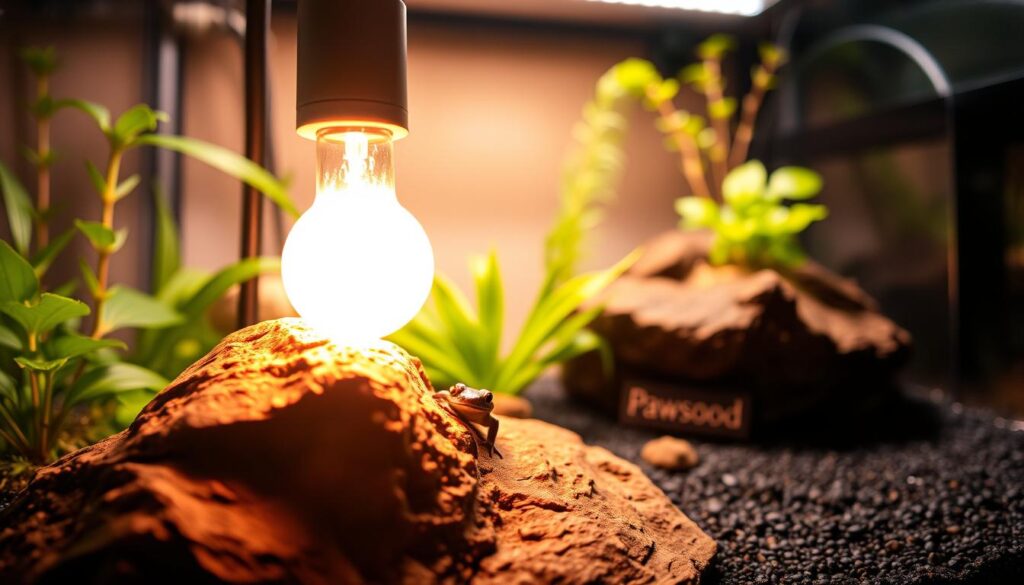
Deep tanks often present challenges for light penetration, as intensity drops significantly with distance. If your enclosure is taller than 18 inches, you may need to adjust the mounting height or use a higher-output bulb. Proper placement is essential to ensure the light reaches the floor where your amphibians spend their time.
Consider using reflective fixtures to direct more light downward into the habitat. You can also create elevated basking platforms to bring your animals closer to the source. Regularly testing the output with a UV index meter helps confirm that your uvb lighting is reaching the required levels at the animal’s level.
Resolving Issues with Shy or Nocturnal Species
Managing light for shy or nocturnal species requires a delicate balance. These animals often avoid direct exposure, making it difficult to ensure they receive adequate benefits. Providing dense foliage and multiple hiding spots allows them to regulate their own exposure naturally.
You can also utilize low-intensity uvb lighting during the early morning hours to mimic natural dawn cycles. This encourages shy species to emerge when the light is less intense. Observe their behavior closely to ensure they are not avoiding the light due to excessive brightness or lack of cover.
| Issue | Potential Cause | Recommended Action |
|---|---|---|
| Bulb Flickering | Loose connection | Tighten fixture and check wiring |
| Low UV Index | Distance too great | Raise substrate or use stronger bulb |
| Animal Hiding | Excessive intensity | Add more shade and foliage |
| Ballast Failure | End of lifespan | Replace the entire fixture unit |
Documenting Amphibian Health and Behavior
Advanced observation tools allow keepers to gain deep insights into how their amphibians interact with their environment. By moving beyond casual observation, you can create a data-driven foundation for your husbandry practices. This systematic approach ensures that your lighting setup truly meets the biological requirements of your animals.
Using Wildlife Moments Camera Equipment for Observation
Integrating a wildlife moments camera into your enclosure setup provides an objective view of your pet’s daily life. These devices are particularly useful for monitoring species that are shy or primarily active during the night. By capturing high-quality footage, you can observe natural behaviors that might otherwise remain hidden from the human eye.
When selecting your wildlife camera equipment, prioritize models that offer infrared capabilities to avoid disturbing the animal’s circadian rhythm. Proper placement is crucial to ensure you capture the full range of movement within the enclosure. This technology acts as a silent observer, documenting how your amphibian utilizes the provided UVB zones throughout the day.
Recording Activity Levels and Feeding Patterns
Consistent documentation of activity levels helps identify potential health trends or environmental stressors. Keep a digital log where you note the times your amphibian basks under the UVB light versus when it retreats to shaded areas. Feeding patterns are equally important, as they often correlate with the animal’s overall metabolic health and exposure to proper lighting.
You should aim to record these observations at least three times per week to establish a reliable baseline. If you notice a sudden decrease in movement or a change in appetite, review your recorded footage to see if it coincides with any changes in the lighting schedule. This proactive monitoring allows you to catch issues before they escalate into serious health concerns.
Analyzing Visual Data to Adjust Lighting Parameters
Once you have gathered sufficient data, the next step is to analyze how your lighting parameters influence behavior. If your amphibian consistently avoids the UVB zone, it may indicate that the intensity is too high or the heat output is excessive. Conversely, frequent lethargy might suggest that the animal is not receiving enough essential ultraviolet radiation to support its metabolic needs.
Use your findings to make precise adjustments to your lighting fixtures or the positioning of basking spots. By correlating visual data with your equipment settings, you can fine-tune the environment to achieve the perfect balance. This iterative process is the hallmark of expert care, ensuring your amphibian thrives in a well-optimized habitat.
Conclusion
Providing proper light is a cornerstone of responsible animal care. A well-planned strategy ensures your pets thrive in a captive environment that mimics their natural world.
Consistent UVB exposure remains a fundamental pillar of health for many species. By integrating quality equipment from brands like Arcadia or Zoo Med, you create a stable foundation for growth and metabolic function.
Success requires more than just initial setup. It demands a commitment to regular maintenance and careful observation of your animals. Keep a close watch on behavior and activity levels to ensure your lighting parameters meet the specific needs of your collection.
Ongoing education helps you refine your approach as new research emerges. Stay curious about the latest developments in herpetological husbandry. Your dedication to these standards guarantees a higher quality of life for the amphibians under your care.