
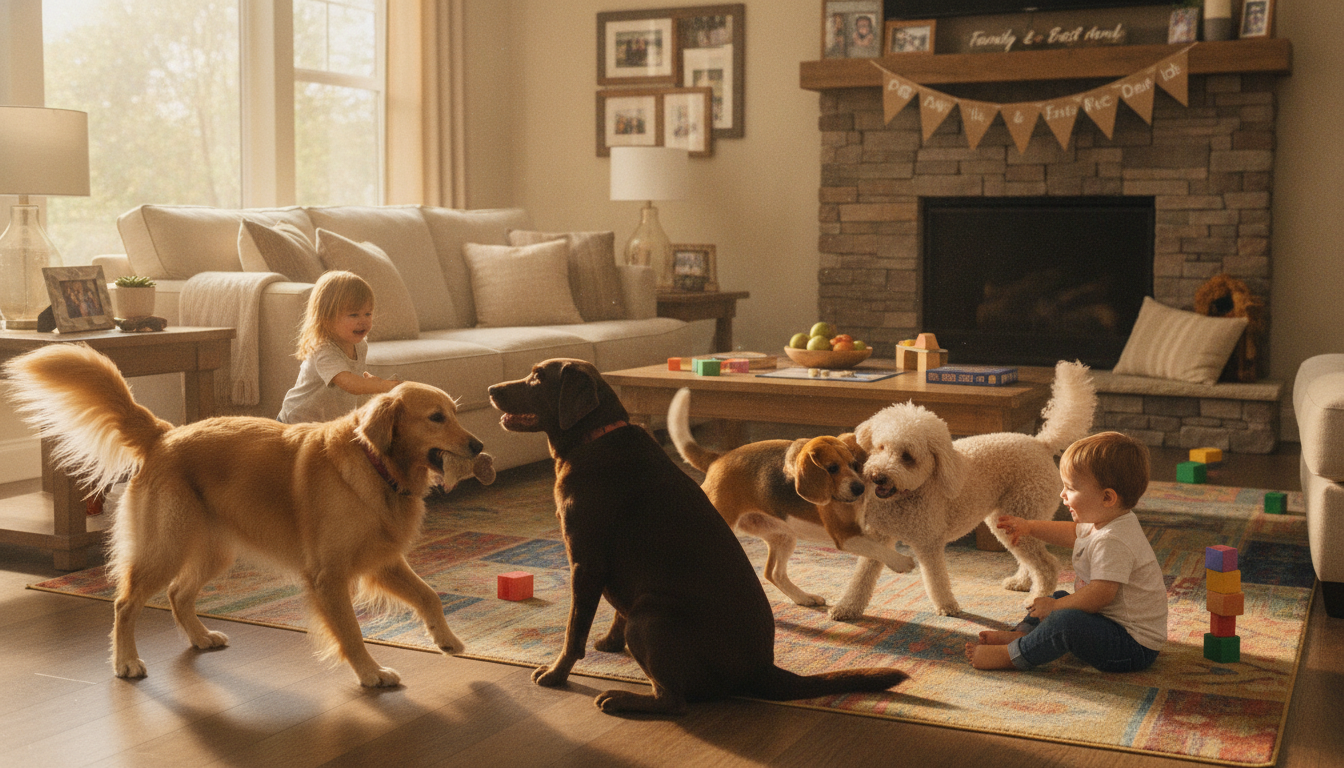
Have you ever wondered if your household routine truly matches the personality of a new four-legged companion? Choosing the right pet involves more than just picking a cute face from a shelter. You must consider gentle temperament, energy levels, and how well a breed adapts to your unique home environment.
- Defining the Traits of the Best Family Dogs
- Understanding Temperament and Socialization
- Matching Energy Levels to Your Household
- Considering Size and Space Requirements
- Top 10 Breeds for Active and Loving Households
- Labrador Retriever
- Golden Retriever
- Beagle
- Cavalier King Charles Spaniel
- Poodle
- Boxer
- Bernese Mountain Dog
- French Bulldog
- Collie
- Newfoundland
- Quick Comparison of Family-Friendly Breeds
- Assessing Your Family Lifestyle and Needs
- Evaluating Time Commitment for Training
- Budgeting for Grooming and Veterinary Care
- Determining Compatibility with Existing Pets
- The Importance of Early Socialization and Training
- Building a Foundation of Obedience
- Exposing Your Dog to New Environments
- Positive Reinforcement Techniques
- Ensuring Safety and Supervision Around Children
- Teaching Children How to Interact with Dogs
- Recognizing Canine Body Language
- Creating Safe Spaces for Your Pet
- Health Considerations and Breed History
- Recognizing the Individual Personality of Every Dog
- Conclusion
- FAQ
- What are the primary qualities to look for when choosing the best family dogs?
- Which are considered the top family-friendly dog breeds for active households?
- How do I find family dogs for all ages, including toddlers and seniors?
- What should I consider regarding the space and size of family dog breeds?
- Are rescue dogs as good as purebreds when searching for the best dogs for families?
- How much time should I dedicate to training and socialization for family-friendly dog breeds?
- What are the typical grooming and healthcare costs for perfect pets for families?
Finding family dogs for all ages requires balancing playfulness with patience. A calm nature and high trainability often serve as the foundation for a harmonious relationship between children and their pets. When you prioritize these traits, you ensure a smoother transition for everyone involved.
Understanding these core qualities helps you identify the best dogs for families that will thrive alongside your loved ones. By focusing on compatibility and grooming needs, you can make an informed choice that brings joy for years to come.
Key Takeaways
- Prioritize a gentle temperament to ensure safety around children.
- Match the animal’s energy level to your daily household routine.
- Consider grooming requirements and size when selecting a breed.
- High trainability makes integration into your home much easier.
- Adaptability is essential for pets living in busy, active environments.
Defining the Traits of the Best Family Dogs
The best family dogs share specific characteristics that make them wonderful additions to any home. When searching for a new pet, you should prioritize traits like patience, trainability, and a gentle nature. These qualities ensure that your dog can handle the busy, often unpredictable environment of a family household.
Understanding Temperament and Socialization
Temperament is perhaps the most important factor when choosing a pet. The ideal dogs for families are typically those with a stable, predictable, and friendly disposition. A dog that is naturally curious rather than fearful will adapt much better to the presence of children and guests.
Early socialization plays a massive role in shaping this behavior. By exposing a puppy to various sounds, people, and environments, you help them become a confident and well-adjusted companion. This foundation is essential for long-term success in a family setting.
Matching Energy Levels to Your Household
Every family has a unique rhythm, and your dog should complement that pace. If your family enjoys weekend hikes and daily runs, a high-energy breed will thrive alongside you. Conversely, if your household prefers quiet evenings, a lower-energy dog will be a much better fit.
Matching energy levels prevents behavioral issues caused by boredom or frustration. When a dog’s exercise needs are met, they are far more likely to remain calm and happy indoors. Always consider your actual daily schedule rather than your aspirational one when selecting a breed.
Considering Size and Space Requirements
Size is a practical consideration that impacts your daily life. While large dogs can be gentle giants, they require more physical space to move comfortably. Smaller breeds might be easier to manage in apartments, but they can be more fragile around very young children.
Grooming needs also vary significantly based on the breed’s coat type. Some dogs require daily brushing, while others need professional grooming every few weeks. Evaluating these factors ensures you can provide the care your pet deserves.
| Trait | High-Energy Breed | Low-Energy Breed |
|---|---|---|
| Exercise Needs | 60+ minutes daily | 20-30 minutes daily |
| Space Required | Large yard preferred | Apartment friendly |
| Grooming Level | Moderate to High | Low to Moderate |
| Best For | Active families | Relaxed households |
By carefully weighing these factors, you can identify the ideal dogs for families that align with your specific lifestyle. Taking the time to research these traits now will lead to a much happier experience for everyone involved.
Top 10 Breeds for Active and Loving Households
Choosing from the top family-friendly dog breeds requires careful thought about your daily life. Every household has a unique rhythm, and finding a canine companion that matches your energy is essential for a happy home. These perfect pets for families offer loyalty, affection, and a wonderful spirit that enriches your daily routine.
Labrador Retriever
The Labrador is famous for its friendly and outgoing nature. They are highly trainable and eager to please, making them a top choice for active families. Their high energy levels require plenty of outdoor play and exercise.
Golden Retriever
Golden Retrievers are known for their patience and gentle temperament. They are excellent with children and thrive in environments where they receive lots of attention. Regular grooming is necessary to maintain their beautiful, thick coats.
Beagle
Beagles are curious, merry, and compact dogs that fit well into many homes. They are social animals that enjoy being part of a pack, which makes them great for families with other pets. Keep in mind that they have a strong sense of smell and love to explore.
Cavalier King Charles Spaniel
If you prefer a smaller companion, the Cavalier is a wonderful option. They are incredibly affectionate and adapt well to both active and relaxed lifestyles. Their gentle nature makes them ideal for families with younger children.
Poodle
Poodles are highly intelligent and come in various sizes to suit your space. They are known for being hypoallergenic, which is a huge benefit for many households. Their trainability is unmatched, though they do require consistent grooming.
Boxer
Boxers are playful, energetic, and protective of their loved ones. They have a fun-loving attitude that keeps families entertained for hours. Because of their high energy, they are best suited for households with a fenced yard.
Bernese Mountain Dog
These gentle giants are calm, good-natured, and very loyal. They are excellent family guardians who remain patient even in busy households. Be prepared for their size and the need for regular brushing to manage shedding.
French Bulldog
Frenchies are charming, easygoing, and require minimal exercise compared to other breeds. They are perfect for apartment living or smaller homes. Their affectionate personality makes them one of the most popular family dog breeds today.
Collie
Collies are devoted, graceful, and highly intelligent companions. They are known for their protective instincts and deep bond with family members. Their moderate energy levels make them great partners for long walks and outdoor adventures.
Newfoundland
Often called “nanny dogs,” Newfoundlands are famous for their sweet and patient disposition. They are naturally protective of children and enjoy being involved in all family activities. While they are large, their calm demeanor makes them a joy to have at home.
- Labrador & Golden: Best for active outdoor families.
- Cavalier & Frenchie: Ideal for smaller spaces and relaxed homes.
- Poodle & Collie: Top choices for high trainability and intelligence.
- Newfoundland & Bernese: Perfect for those who love large, gentle companions.
Quick Comparison of Family-Friendly Breeds
Finding the perfect pet is easier when you can see how top family-friendly dog breeds stack up against one another. By looking at specific traits, you can narrow down your search to find a companion that fits your lifestyle perfectly. This structured approach helps you visualize which dog might thrive in your unique home environment.
When reviewing these family dog breeds, consider how their natural energy levels align with your daily routine. Some dogs require significant exercise, while others are content with shorter walks and indoor play. Understanding these differences is the first step toward a happy, long-term relationship with your new pet.
The following table provides a clear overview of the most popular family-friendly dog breeds. Use this data to compare size, energy, and training needs at a glance.
| Breed | Size | Energy Level | Trainability | Grooming Needs |
|---|---|---|---|---|
| Labrador Retriever | Large | High | High | Moderate |
| Golden Retriever | Large | High | High | High |
| Beagle | Medium | High | Moderate | Low |
| Cavalier King Charles | Small | Low | High | Moderate |
| Poodle | Variable | High | High | High |
| Boxer | Large | High | Moderate | Low |
| Bernese Mountain Dog | Large | Moderate | Moderate | High |
| French Bulldog | Small | Low | Moderate | Low |
| Collie | Large | Moderate | High | High |
| Newfoundland | Giant | Low | Moderate | High |
Utilizing these data points ensures you can make an informed choice that fits your specific household constraints. Remember that individual personality often varies, but these breed standards provide a reliable starting point for your search. Focus on the traits that matter most to your family to ensure a successful match.
Assessing Your Family Lifestyle and Needs
Before you fall in love with a puppy, it is vital to look at the practical side of pet ownership. Finding the ideal dogs for families requires a realistic look at your daily schedule and long-term goals. By aligning your expectations with the reality of your home environment, you set the stage for a successful, lifelong bond.
Evaluating Time Commitment for Training
Training is not a one-time event but a continuous process that requires patience. You must dedicate time every single day to reinforce good behavior and teach basic commands. Early socialization is particularly important to ensure your dog feels comfortable in various settings.
- Schedule at least 30 minutes of active training daily.
- Enroll in puppy classes to build a strong foundation of obedience.
- Use positive reinforcement to encourage desired behaviors consistently.
Budgeting for Grooming and Veterinary Care
Financial planning is a key part of choosing the best family dogs. Beyond the initial adoption fee, you must account for recurring costs that keep your pet healthy and happy. Unexpected medical issues can arise, so having a dedicated savings fund is a smart move.
Consider these essential expenses when planning your budget:
- Routine veterinary checkups and annual vaccinations.
- High-quality nutrition tailored to your dog’s specific life stage.
- Professional grooming services for breeds with high-maintenance coats.
Determining Compatibility with Existing Pets
If you already have animals at home, their comfort is just as important as your own. Every dog is an individual, and their personality may or may not mesh well with your current pets. Supervision around children and other animals is critical during the initial introduction phase.
To ensure a harmonious transition, follow these steps:
- Introduce animals in a neutral territory to reduce territorial stress.
- Observe body language closely to identify signs of anxiety or aggression.
- Create safe, separate spaces where each pet can retreat if they feel overwhelmed.
The Importance of Early Socialization and Training
Bringing a new dog into your home requires a commitment to early guidance and socialization. These steps are vital for raising well-adjusted family canine companions who can navigate various social settings with confidence. By starting early, you set the stage for a lifetime of harmony.
Building a Foundation of Obedience
A well-behaved pet starts with a clear understanding of basic commands. Consistency is the most important factor when teaching your dog how to interact with the world. Establishing simple rules early on helps your dog feel secure and understood.
Focus on teaching essential cues like “sit,” “stay,” and “come” during your daily routine. These commands provide the structure necessary for a calm household. When your dog knows what is expected, they are much more likely to succeed in a busy family environment.
Exposing Your Dog to New Environments
Socialization involves introducing your pet to a variety of sights, sounds, and people. This exposure helps your dog remain calm when faced with new or unexpected situations. Gradual exposure is the key to building a confident and brave pet.
Take your dog on short walks in different neighborhoods or introduce them to friendly neighbors. By exposing your dog to new environments early on, you significantly increase the likelihood of a calm and well-behaved household pet. This proactive approach prevents fear-based behaviors later in life.
Positive Reinforcement Techniques
Positive reinforcement is the most effective way to encourage good behavior. By rewarding desired actions with treats, praise, or play, you create a strong bond with your pet. This method is highly recommended for all family-friendly dog breeds to ensure they remain eager to learn.
Avoid harsh punishments, as these can damage the trust between you and your dog. Instead, focus on catching your pet doing something right and rewarding them immediately. This technique builds a strong foundation of obedience, making your pet more adaptable to your family’s unique lifestyle.
Ensuring Safety and Supervision Around Children
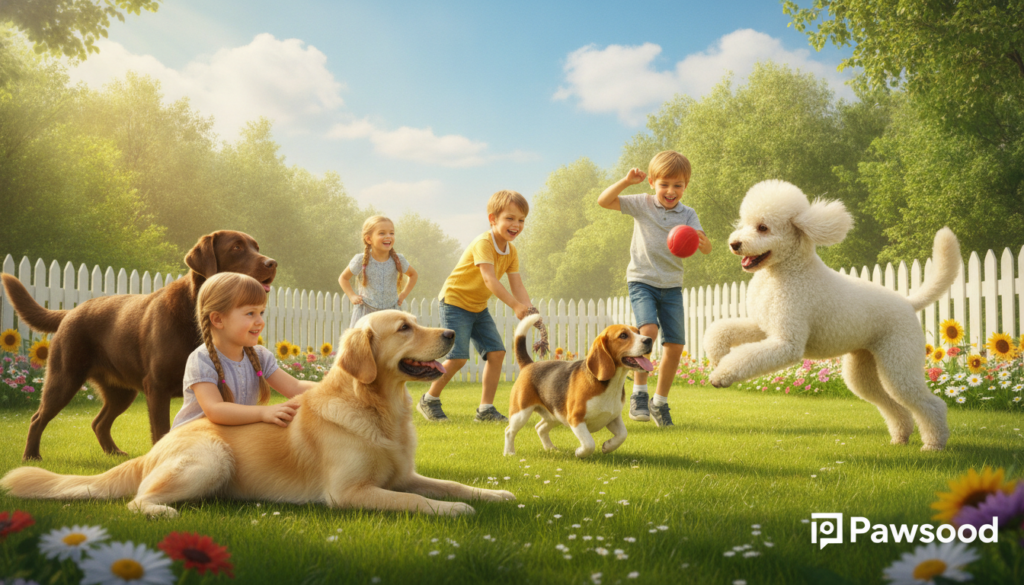
Safety is the most important aspect of welcoming family dogs for all ages into your household. While many breeds are naturally gentle, consistent supervision remains the best way to prevent accidents. By setting clear boundaries, you create a secure environment where both your children and your pet can thrive together.
Teaching Children How to Interact with Dogs
Children often lack the experience to understand how a dog feels during play. You should teach them to approach the animal calmly and avoid sudden movements or loud noises. It is vital to explain that a dog is not a toy and needs respect to feel comfortable.
Encourage your children to follow these simple rules:
- Always ask permission before petting a dog.
- Avoid touching the dog while it is eating or sleeping.
- Keep hands away from the dog’s face and tail.
Recognizing Canine Body Language
Understanding what your dog is trying to communicate helps you intervene before a situation escalates. Dogs often show subtle signs of stress long before they growl or snap. Look for behaviors like lip licking, yawning, or turning their head away when they feel overwhelmed.
When a dog is happy and relaxed, their body will appear loose and wiggly. If you notice your dog becoming stiff or tucking their tail, it is time to give them some space. Teaching your children to spot these cues is a key part of managing family dogs for all ages safely.
Creating Safe Spaces for Your Pet
Every dog needs a quiet retreat where they can escape the excitement of a busy home. A crate, a specific corner, or a gated room can serve as a sanctuary for your pet. Ensure that your children understand this space is off-limits so the dog feels truly secure.
| Safety Measure | Primary Goal | Action Required |
|---|---|---|
| Active Supervision | Prevent accidents | Always watch interactions |
| Quiet Zones | Reduce stress | Designate a private area |
| Respectful Play | Build trust | Teach gentle touch |
| Body Language | Early warning | Monitor for signs of fear |
By implementing these strategies, you ensure that your home remains a happy place for everyone. Proper supervision and education are the foundations of a successful life with family dogs for all ages.
Health Considerations and Breed History
When you search for the best dogs for families, their medical history and breed background are vital pieces of the puzzle. A dog’s lineage often dictates their physical well-being and temperament over time. By prioritizing these factors, you ensure that your new companion enjoys a long, happy life in your home.
Researching Genetic Predispositions
Every breed carries a unique set of genetic traits that may include predispositions to certain health conditions. Understanding these risks allows you to provide proactive care and manage potential issues before they become emergencies. Early detection is often the key to successful treatment and a better quality of life.
You should consult with veterinarians or breed-specific organizations to learn about common ailments. For instance, some larger breeds may be prone to joint issues, while others might face respiratory challenges. Being informed helps you select the best dogs for families that fit your ability to manage specific health needs.
Working with Reputable Breeders or Rescues
Finding a healthy pet starts with choosing a responsible source. Reputable breeders perform extensive health screenings on their parent dogs to minimize the risk of hereditary diseases. They will gladly provide documentation and answer questions about the health history of the litter.
Rescue organizations also play a crucial role by providing medical evaluations for the animals in their care. When you adopt, ask about the dog’s background and any known health records. Choosing the best dogs for families often involves working with experts who prioritize the animal’s long-term welfare above all else.
| Source Type | Health Screening | Documentation |
|---|---|---|
| Reputable Breeder | Genetic Testing | Provided |
| Local Rescue | Vet Exam | Partial |
| Private Seller | None | None |
Recognizing the Individual Personality of Every Dog
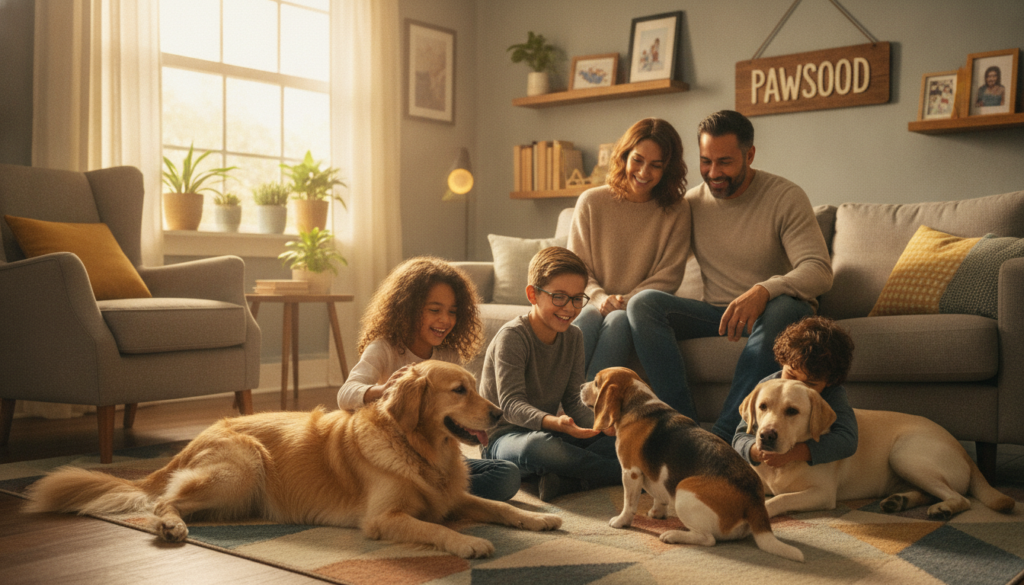
While breed standards offer a helpful roadmap, the true heart of a dog lies in its unique personality. Even within a litter of the same breed, you will often find a wide range of temperaments and energy levels. Understanding this variation is essential when you are looking for the best family dogs to join your home.
Why Breed Standards Are Only Guidelines
Breed standards provide a general idea of what to expect regarding size, coat, and typical behavior. However, these descriptions are not absolute rules for every single animal. Genetics, early life experiences, and individual socialization play a massive role in shaping how a dog interacts with the world.
A dog might technically fit the physical description of a breed but possess a personality that is much calmer or more active than average. Relying solely on breed labels can sometimes lead to overlooking a perfect match. Always prioritize meeting the specific animal to see if their nature aligns with your household.
The Role of Temperament Testing
When you are choosing the best family dogs, formal temperament testing can be an incredibly useful tool. These assessments evaluate how a dog reacts to new people, loud noises, and different physical sensations. They provide a snapshot of a dog’s confidence and stability in various situations.
These tests can reveal hidden traits that might not be obvious during a quick visit. By focusing on the individual, you can find a companion that truly matches your family’s specific dynamic. The following table highlights how individual traits can differ from general breed expectations.
| Trait Category | General Breed Expectation | Individual Variation |
|---|---|---|
| Energy Level | High Activity | May be calm or sedentary |
| Social Nature | Very Outgoing | May be shy or reserved |
| Trainability | Highly Responsive | May be independent or stubborn |
| Sensitivity | Moderate | May be highly reactive to noise |
Conclusion
Bringing a dog into your household marks the start of a rewarding journey filled with joy and shared adventures. Selecting the right pet requires a thoughtful look at your daily routine and the specific needs of your household members.
Focusing on temperament and health ensures you find one of the perfect pets for families. These animals bring immense happiness and stability to your living space. Dedicated training and consistent care turn a new puppy into a well-adjusted member of your pack.
You now possess the knowledge to make an informed choice that benefits everyone involved. These loyal family canine companions offer unconditional love and support for many years. Take your time during the selection process to ensure a lasting bond.
Reach out to local shelters or reputable breeders to begin your search today. Your future pet is waiting to become a cherished part of your life. Enjoy the process of building a beautiful relationship with your new four-legged friend.